
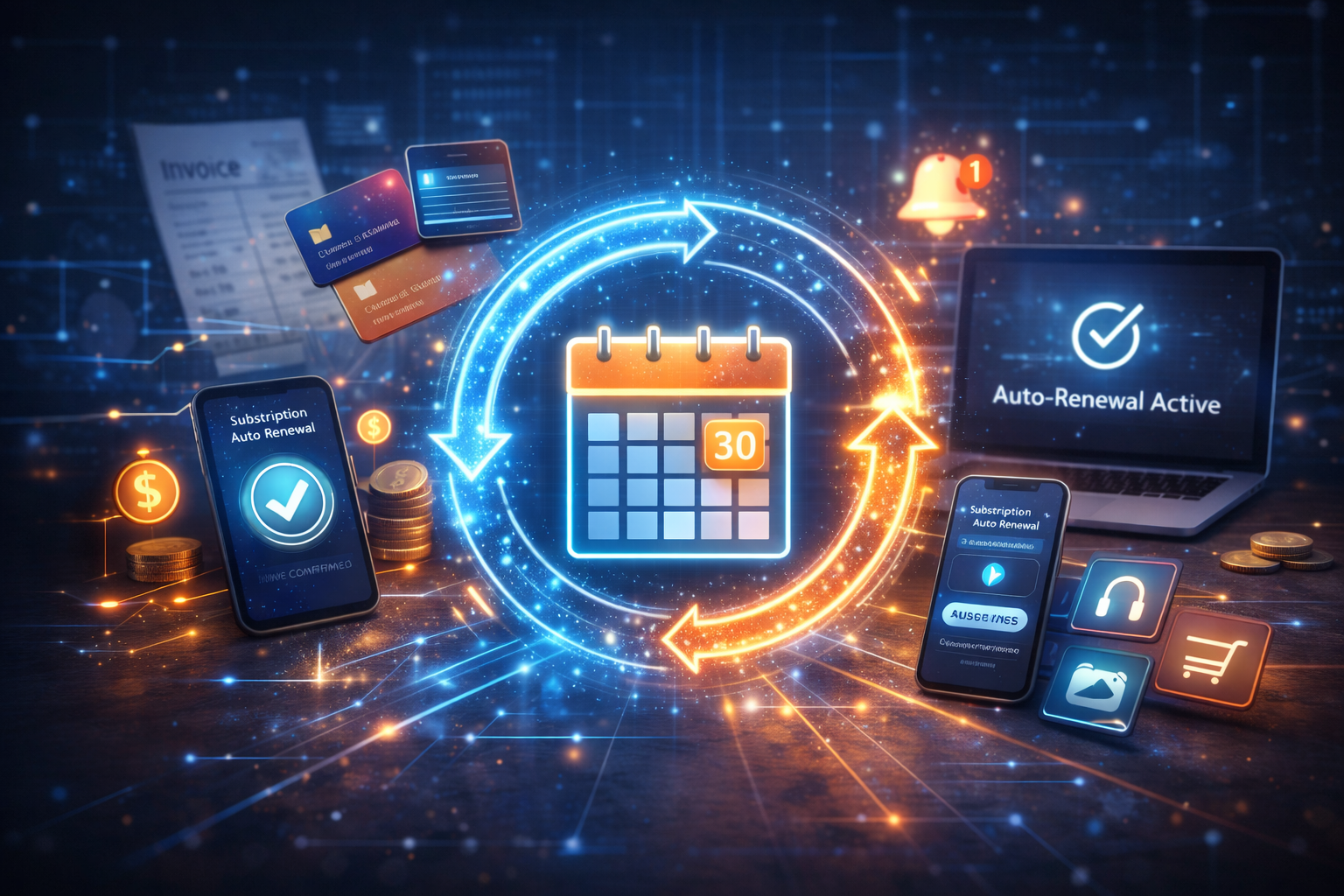
How Auto-Renewal Works in Subscription Billing Systems

How auto-renewal works in subscription billing systems: understand billing cycles, payment retries, subscription states, and automated renewal logic in digital platforms.

How auto-renewal works is a key concept in subscription-based pricing systems. Auto-renewal allows digital services to automatically extend a customer’s subscription at the end of each billing period without requiring manual payment confirmation.

Instead of asking users to purchase access again after every billing cycle, subscription platforms store billing information and trigger automated renewal charges. When the renewal process is successful, the subscription period is extended and the user retains uninterrupted access to the product or service.

Understanding how auto-renewal works requires examining subscription lifecycle management, billing schedules, payment processing systems, and retry mechanisms.

These mechanisms operate within broader subscription architectures that define recurring billing intervals and lifecycle states.

Auto-renewal is not simply a recurring charge — it is a coordinated system that manages time-based entitlements, financial transactions, and access control across billing cycles.

Within the Pricing and Billing Systems pillar, auto-renewal is closely connected to subscription models, free trials, usage-based pricing, and SaaS pricing tiers.

Clear System Definition

Auto-renewal is a subscription billing mechanism that automatically charges a customer at the end of each billing cycle and extends access to the service.

The system performs several key actions:

  • Detecting the end of a billing period
  • Generating a renewal invoice
  • Charging the stored payment method
  • Updating the subscription status
  • Extending entitlement access

If the payment is successful, the subscription remains active. If the payment fails, the system triggers retry logic or changes the subscription status.

Auto-renewal is designed to maintain continuous service access without requiring the user to manually repurchase the subscription.

Many mobile apps implement recurring subscriptions through in-app purchase subscriptions, which rely on platform billing infrastructure.


Where Users Encounter Auto-Renewal

Auto-renewal is used across many types of digital platforms.

Common examples include:

  • Streaming subscriptions
  • SaaS productivity software
  • Cloud infrastructure platforms
  • Mobile app subscriptions
  • Online learning platforms
  • Membership websites

For example, when users subscribe to a monthly streaming service, the platform automatically charges their payment method every month. As long as the renewal payment succeeds, the subscription continues without interruption.

Major payment platforms such as Stripe provide documentation explaining automated subscription billing systems:

https://docs.stripe.com/billing/subscriptions/overview

What Auto-Renewal Is

Precise Definition

Auto-renewal is a billing system feature that automatically extends a subscription period after the current billing cycle ends.

The renewal process includes:

  1. Detecting the upcoming billing date
  2. Generating a new billing invoice
  3. Charging the stored payment method
  4. Updating subscription metadata
  5. Extending service access

The system executes these steps automatically according to the defined billing interval.


Boundaries of Scope

Auto-renewal does not include:

  • One-time purchases
  • Manual subscription renewals
  • Usage-based billing without recurring periods
  • Lifetime access purchases

Auto-renewal specifically applies to time-based subscription billing models where access must be renewed periodically.


What Problem Auto-Renewal Solves

Auto-renewal exists because subscription services operate continuously over time.

Without auto-renewal systems:

  • Users would need to manually repurchase subscriptions every billing cycle.
  • Platforms would experience frequent service interruptions.
  • Billing systems would require manual confirmation for every payment.

Auto-renewal solves several operational problems:

  • Maintaining uninterrupted service access
  • Simplifying billing operations
  • Reducing manual payment interactions
  • Supporting predictable recurring revenue models

For digital platforms, auto-renewal ensures that subscription access and billing cycles remain synchronized.

If subscription changes occur before a renewal date, billing systems may apply prorated adjustments. These adjustments are described in what is proration in billing .


How Auto-Renewal Works (Step-by-Step)

Understanding how auto-renewal works requires examining the internal subscription lifecycle.


Step 1: Subscription Creation

The process begins when a user subscribes to a service.

During signup, the system stores:

  • customer ID
  • subscription ID
  • billing interval (monthly, yearly, etc.)
  • next billing date
  • payment method token

The billing interval determines when auto-renewal will occur.


Step 2: Billing Cycle Monitoring

The system continuously monitors subscription records.

A background job or billing scheduler checks:

current_time >= next_billing_date

When the billing date arrives, the renewal process begins.

Billing schedulers often operate through distributed task systems that process renewal events in batches.


Step 3: Invoice Generation

Before charging the customer, the billing system generates a renewal invoice.

The invoice typically includes:

  • subscription fee
  • applicable taxes
  • discounts or credits
  • usage-based overages (if applicable)

The invoice becomes the financial record for the upcoming billing period.


Step 4: Payment Processing

Once the invoice is generated, the system attempts to charge the stored payment method.

The payment request is sent to the payment processor.

If the transaction is successful:

  • the invoice is marked as paid
  • the subscription period is extended
  • access remains active

Payment processing relies on external payment networks such as credit card systems or digital wallets.

Stripe provides detailed documentation on recurring billing mechanisms:

https://docs.stripe.com/billing

Step 5: Subscription Extension

After a successful payment, the system updates the subscription metadata.

Typical updates include:

  • new billing cycle start date
  • next billing date
  • payment history record
  • renewal confirmation status

The user’s entitlements continue without interruption.


Payment Failure and Retry Logic

Understanding how auto-renewal works also requires examining payment failures.

Payments may fail for several reasons:

  • expired credit cards
  • insufficient funds
  • fraud detection triggers
  • network errors

When a payment fails, the system usually enters a retry phase.

Retry logic may include:

  • multiple payment attempts over several days
  • reminder emails requesting updated payment methods
  • temporary grace periods

If payment retries fail, the subscription status may change to past_due or canceled.


Subscription States in Auto-Renewal Systems

Auto-renewal platforms often manage multiple subscription states.

Subscription StateDescription
ActiveSubscription is valid and auto-renewal is scheduled
TrialingUser is in a free trial period
Past DuePayment attempt failed
CanceledSubscription ended
IncompletePayment method not provided

These states help billing systems determine when auto-renewal should occur.

Relationship Between Auto-Renewal and Other Pricing Systems

Auto-renewal interacts with several other billing mechanisms.

These include:

  • subscription pricing models
  • free trial onboarding periods
  • SaaS pricing tiers
  • usage-based pricing

For example:

Some services begin with a free trial period before the first auto-renewal occurs.

Others combine usage-based pricing with recurring subscription fees.

Platforms with multiple SaaS pricing tiers may apply different renewal charges depending on the user’s selected plan.

Internal references:

  • how free trials work
  • what is usage-based pricing
  • how SaaS pricing tiers work
  • how subscription pricing works

Tradeoffs and Design Constraints

Although auto-renewal simplifies subscription billing, it introduces several operational challenges.


Payment Reliability

Auto-renewal systems depend heavily on payment reliability.

Expired cards or declined payments may disrupt the renewal process.

Platforms must implement retry logic and notification systems to reduce churn caused by payment failures.


Customer Transparency

Many jurisdictions require businesses to clearly disclose auto-renewal terms.

Users must be informed about:

  • billing frequency
  • renewal charges
  • cancellation procedures

Clear communication helps reduce billing disputes.


Billing System Complexity

Recurring billing requires reliable infrastructure.

Auto-renewal systems must manage:

  • millions of subscription records
  • billing schedules
  • tax calculations
  • payment retries
  • subscription state transitions

Even small system errors can impact large numbers of users simultaneously.


Common Misconceptions About How Auto-Renewal Works

Auto-Renewal Means Unlimited Access

Auto-renewal only extends access if payment succeeds.

If payment fails, the subscription may be suspended.


Auto-Renewal Charges Without Notification

Most subscription platforms notify users before renewal dates or provide billing reminders.


Auto-Renewal Cannot Be Cancelled

Users typically retain the ability to cancel subscriptions before the next renewal cycle.


FAQ: How Auto-Renewal Works

What happens if a subscription auto-renewal payment fails?

Most systems initiate retry attempts and notify the user to update payment details. If payment remains unsuccessful, the subscription may enter a suspended or canceled state.


Can users disable auto-renewal?

Yes. Most subscription platforms allow users to cancel before the next billing cycle, preventing the renewal charge.


Do auto-renewal systems charge immediately at midnight?

Billing schedules vary. Some systems process renewals at specific times of day depending on system load and regional billing policies.


Are auto-renewal payments secure?

Auto-renewal payments rely on encrypted payment processing systems that comply with financial security standards.


Billing Cycle Timing and Renewal Scheduling

Understanding how auto-renewal works also requires examining how billing systems schedule renewal events across large numbers of subscriptions. While the concept of auto-renewal appears simple from a user perspective, the underlying infrastructure must handle precise timing and high transaction volumes.

Every subscription contains metadata that defines when the next renewal should occur. This information is stored in subscription records as fields such as:

  • billing interval
  • billing cycle anchor
  • next billing date
  • renewal status

The billing cycle anchor is especially important because it determines the recurring schedule for future renewals. For example, if a user subscribes on the 15th of the month to a monthly plan, the system may set the billing cycle anchor to that specific date. Future renewals then occur on the same day of each billing cycle.

However, large platforms rarely execute renewals at exactly midnight for every subscription. Instead, they often distribute renewal jobs across time windows to reduce system load. This approach helps prevent performance bottlenecks that could occur if thousands or millions of payments were processed simultaneously.

In practice, renewal scheduling systems operate through background task processors. These processors scan subscription databases and identify records where the current time has reached or passed the next billing date. When this condition is detected, the system queues a renewal task that generates an invoice and attempts payment.

A simplified renewal logic check may look like this:

current_time >= next_billing_date

When this condition evaluates as true, the subscription enters the renewal workflow.

Large billing systems often process renewals in batches rather than individually. Batch processing allows platforms to handle large volumes of subscriptions efficiently. It also helps payment processors manage transaction throughput and reduces the likelihood of rate limits or service interruptions.

Another important element of how auto-renewal works is timezone management. Subscription systems must decide which timezone governs billing schedules. Some platforms standardize billing events using Coordinated Universal Time (UTC), while others anchor billing cycles to the user’s regional timezone. Without consistent time management, renewal events could trigger earlier or later than expected, leading to billing disputes.

Platforms must also consider edge cases such as:

  • months with different numbers of days
  • daylight saving time changes
  • leap years
  • delayed background jobs

For example, if a user subscribes on January 31st to a monthly plan, the system must determine how renewals behave in shorter months such as February. Some billing systems automatically shift renewal dates to the final day of the month, while others adjust the billing cycle anchor permanently.

Auto-renewal scheduling also interacts with payment processor limits and fraud detection systems. When many transactions are processed simultaneously, payment gateways may temporarily flag large volumes of similar charges. To avoid triggering security mechanisms, some subscription platforms stagger renewal attempts across several hours or even multiple days.

In addition, renewal systems must remain resilient to temporary outages. If a billing job fails or the payment processor becomes unavailable, the system must retry the renewal attempt once services are restored. This ensures that temporary infrastructure problems do not permanently disrupt subscriptions.

Because of these operational challenges, large subscription platforms invest heavily in reliable scheduling infrastructure. Renewal schedulers, job queues, and background workers coordinate to ensure that billing events occur accurately and consistently across millions of users.

When analyzing how auto-renewal works at scale, the key takeaway is that renewal timing is not simply a single payment trigger. It is part of a distributed scheduling system that continuously monitors subscription records, generates billing events, and processes payments across the entire platform.

Conclusion

Understanding how auto-renewal works is essential for analyzing subscription-based pricing systems. Auto-renewal enables digital platforms to extend subscription access automatically while maintaining synchronized billing cycles.

The system relies on coordinated processes including billing schedules, invoice generation, payment processing, and subscription state management. When implemented correctly, auto-renewal ensures uninterrupted service access while reducing manual billing interactions.

Within modern digital platforms, auto-renewal is a foundational component of subscription pricing systems and plays a critical role in maintaining stable recurring revenue models.

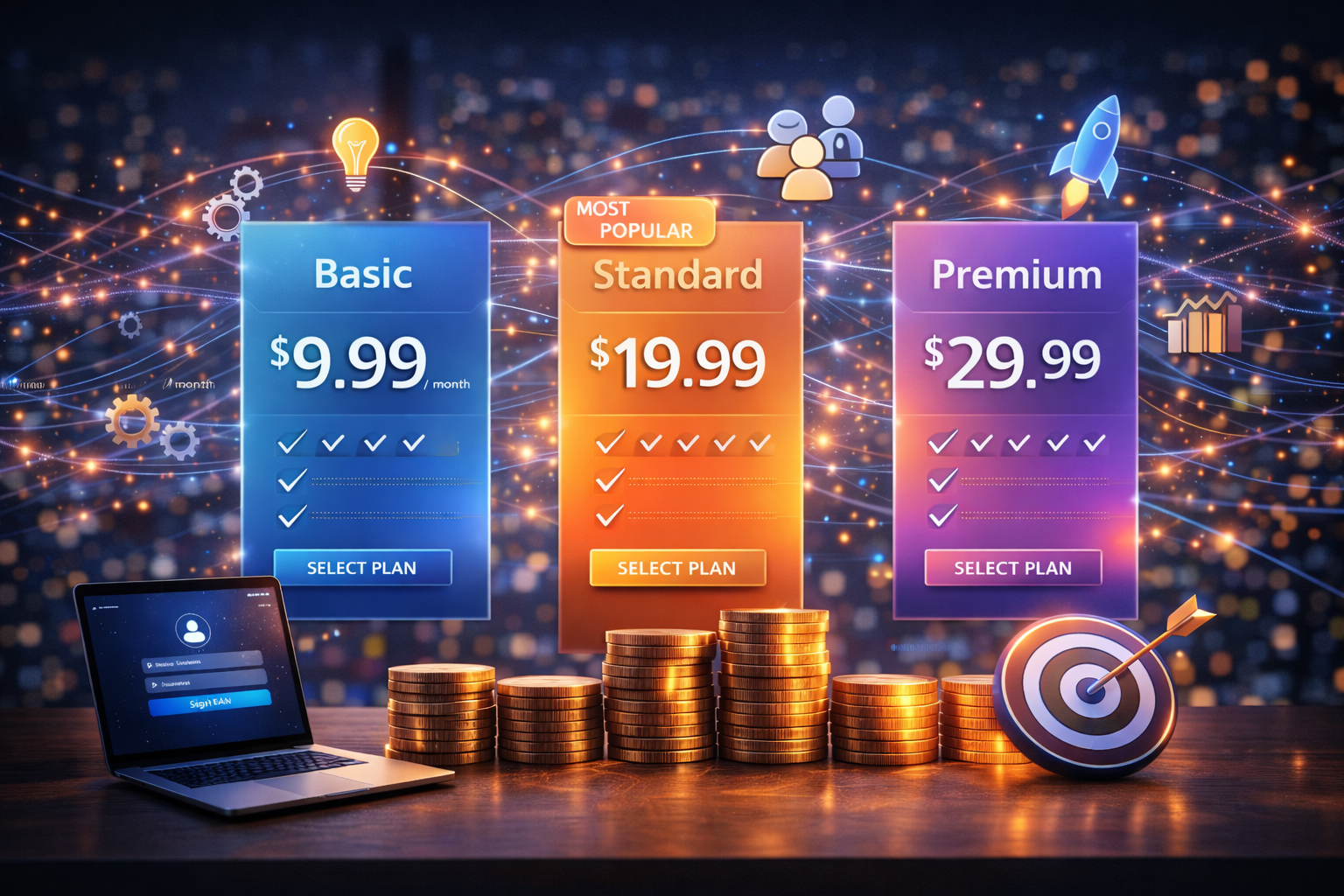
How free trials work

How free trials work in subscription systems: understand trial states, billing handoff, entitlement control, payment retries, and lifecycle transitions in digital billing architectures.

How free trials work is often explained as “temporary free access before payment begins.” From a systems perspective, this description is incomplete. A free trial is not simply free usage — it is a controlled billing state inside a subscription system with deterministic time boundaries, entitlement rules, and a scheduled billing transition.

Understanding how free trials work requires examining subscription objects, billing lifecycle transitions, payment authorization logic, entitlement enforcement, time precision constraints, and failure handling. The complexity lies not in granting access, but in managing the handoff from non-billable state to billable state without financial inconsistency, entitlement ambiguity, or revenue leakage.

In modern digital systems, free trials are tightly integrated with subscription engines, identity layers, invoice generators, and payment processors. They are lifecycle phases, not promotional add-ons. This article explains how free trials work as a system mechanism inside digital billing architectures.

To understand the broader context in which trial states exist, it helps to examine how subscription pricing works at a system level.


Clear System Definition

A free trial is a time-bound subscription state that:

  • Grants temporary entitlements
  • Defers billing
  • Schedules a future billing event
  • Defines deterministic transition rules
  • Preserves billing context for later activation

It operates inside the broader subscription lifecycle and must integrate with:

  • Authentication systems
  • Entitlement systems
  • Billing logic engines
  • Payment processing infrastructure
  • Access control mechanisms
  • Time and scheduling services

A free trial is not an absence of billing logic. It is a delayed billing state governed by predefined transition conditions.


Where Users Encounter Free Trials

Users encounter free trials in:

  • SaaS subscription platforms
  • Streaming services
  • Developer tools
  • API-based platforms
  • Cloud infrastructure dashboards
  • Productivity applications
  • Enterprise software procurement flows

In many SaaS products, trial access reflects the structure of defined pricing tiers that later determine billing and entitlements.

In each case, the system must manage the same structural problem:

Provide temporary entitlement access while preparing a deterministic billing activation event.

The external user experience may differ, but the internal mechanics follow similar architectural patterns.


What It Is

Precise Definition

A free trial is a structured subscription lifecycle phase in which:

  • subscription_status = trialing
  • charges = deferred
  • entitlements = temporarily active
  • billing_activation = scheduled

It is not a separate pricing model.
It is a controlled pre-billing state inside a subscription model.

The defining property of how free trials work is that billing activation is predetermined, not manually triggered. The system schedules a transition event at trial creation time.


Boundaries of Scope

This article does not include:

  • Freemium (permanent free tiers with no billing transition)
  • One-time promotional credits
  • Demo environments without subscription objects
  • Marketing strategy for conversion
  • Behavioral experimentation

This article strictly explains how free trials work inside billing systems.


What Problem Free Trials Solve

From a systems perspective, free trials solve:

  • Controlled temporary access before payment
  • Deferred payment authorization
  • Subscription initialization without immediate settlement
  • Reduced onboarding friction while preserving billing structure

The key technical challenge is:

Scheduling a predictable billing handoff while maintaining entitlement correctness and financial integrity.

Free trials allow a system to initialize the full subscription context early — including plan, billing interval, and pricing rules — while deferring charge execution.


How Free Trials Work in Subscription Billing Systems

This section explains step-by-step how free trials work operationally.


Step 1: Account Creation and Identity Binding

A trial begins when:

  • A user creates an account
  • Authentication credentials are established
  • A subscription object is created

The system creates structured records:

  • user_id
  • subscription_id
  • plan_id
  • status = trialing
  • trial_start_timestamp
  • trial_end_timestamp
  • billing_cycle_anchor
  • currency
  • pricing_version

Identity binding is critical because how free trials work depends on associating a single trial period with a unique account or entity. Systems may enforce:

  • One trial per email
  • One trial per payment method
  • One trial per organization
  • Device-based restrictions

Without identity constraints, trial abuse becomes a systemic risk.

In many subscription platforms, this transition activates the auto-renewal billing system that continues charging the subscription at regular intervals.


Step 2: Trial State Initialization

When status = trialing:

  • No invoice is generated
  • No subscription charge is applied
  • Billing cycle countdown begins
  • Entitlements activate under trial rules

The subscription record must define:

  • Trial duration
  • Exact expiration timestamp
  • Billing interval after trial
  • Next billing date
  • Plan configuration snapshot

Time boundary precision is critical.

The system must define:

  • Timezone authority (UTC vs regional)
  • Inclusive vs exclusive expiration logic
  • Timestamp rounding behavior
  • Execution timing tolerance

Even small timing inconsistencies can create billing disputes or early suspension errors.


Step 3: Entitlement Activation During Trial

Entitlement systems evaluate subscription state continuously.

Logic pattern:

IF subscription_status == trialing
THEN grant trial entitlements

Trial entitlements may include:

  • Full feature access
  • Limited feature access
  • Usage caps
  • Sandbox-only permissions
  • API rate limits
  • Temporary quota thresholds

How free trials work depends heavily on entitlement mapping accuracy. Entitlements must reflect:

  • Trial limitations
  • Plan characteristics
  • Future paid access expectations

Incorrect entitlement mapping can result in:

  • Overexposure of premium features
  • Unexpected feature removal at conversion
  • Customer confusion during handoff

Step 4: Payment Method Collection

How free trials work depends significantly on when payment credentials are collected.

Model A: Card Required at Signup

  • Card token stored securely
  • Optional authorization pre-check
  • Automatic charge at trial end
  • Billing handoff is automated

Advantages:

  • Predictable conversion flow
  • Lower post-trial friction

Risks:

  • Authorization declines at activation
  • Card expiration before trial end
  • Fraud detection triggers

Model B: Card Required at Trial End

  • Reminder notification sent
  • No automatic charge possible without card
  • Subscription may expire if card not added

Advantages:

  • Lower signup friction
  • Reduced initial abandonment

Risks:

  • Higher drop-off at trial end
  • Manual billing interruption

The chosen model directly affects how free trials work during billing handoff.

Reference documentation:

https://docs.stripe.com/billing/subscriptions/trials

Step 5: Trial Countdown Monitoring

The system continuously evaluates:

current_time >= trial_end_timestamp

If false:

  • Remain in trial state

If true:

  • Trigger billing activation workflow

Monitoring may be implemented via:

  • Scheduled background jobs
  • Event-driven triggers
  • Distributed lifecycle processors
  • Cron-based subscription sweepers

The monitoring service must be resilient to:

  • Delayed job execution
  • Queue backlogs
  • Server restarts
  • Clock synchronization errors

Trial expiration must execute once and only once to avoid duplicate billing attempts.


Step 6: Billing Handoff (Trial → Active)

This is the most critical moment in how free trials work.

When trial ends:

  1. status changes from trialing → active
  2. Invoice object is generated
  3. Billing logic calculates subscription charge
  4. Payment attempt executed
  5. Entitlements updated accordingly

The transition must be atomic. Partial execution may cause:

  • Active subscription without invoice
  • Invoice without status change
  • Entitlement mismatch

Possible outcomes:

Successful Payment

  • Subscription remains active
  • Entitlements continue uninterrupted
  • Next billing cycle scheduled

Failed Payment

  • status = past_due
  • Retry logic initiated
  • Grace period may activate
  • Entitlement downgrade may occur

No Payment Method

  • status = incomplete
  • Access may be suspended
  • Reminder notifications triggered

The billing handoff defines the correctness of the entire free trial system.

This transition mirrors the activation phase described in subscription pricing architectures, where billing state and entitlement state must remain synchronized.


Step 7: Grace Period Handling

Some systems implement controlled grace windows.

Grace handling may include:

  • Retry intervals (e.g., 3 attempts over 7 days)
  • Partial entitlement continuation
  • Gradual feature restriction
  • Hard suspension after threshold

Grace periods require:

  • Retry counters
  • Scheduled payment attempts
  • Deterministic suspension rules
  • Audit logging of attempts

Grace logic must be transparent and consistent to avoid disputes.


Variations in How Free Trials Work

Free trials can be implemented in multiple structural forms.


1. Time-Based Trials

Fixed duration (e.g., 7, 14, 30 days).

Characteristics:

  • Simple time boundary
  • No dependency on usage
  • Straightforward billing activation

Most common implementation.


2. Usage-Capped Trials

Trial ends when:

  • Usage exceeds defined threshold
  • Resource consumption limit reached

This combines free trials with usage-based pricing logic.

This combines free trials with usage-based pricing logic, where consumption is measured and later converted into billable units.

System must track:

  • Metered usage during trial
  • Cap threshold triggers
  • Early billing activation

3. Feature-Limited Trials

Trial entitlements restricted to:

  • Reduced quotas
  • Restricted feature sets
  • Limited API endpoints
  • Sandbox-only environments

Conversion transition may unlock:

  • Expanded quotas
  • Production endpoints
  • Higher rate limits

4. Credit-Based Trials

System grants free credits:

  • Credits deducted via usage metering
  • Trial ends when credit balance reaches zero

This merges prepaid billing logic with trial state.

The system must ensure credit deduction consistency and prevent overdraft.

When the trial period ends in a mobile application, the system may convert the user into a paid subscription through in-app purchase billing systems.


Tradeoffs and Design Constraints

Abuse Prevention

Systems must prevent:

  • Multiple trial registrations
  • Disposable email usage
  • Payment method cycling
  • Device rotation abuse

Controls may include:

  • Email verification
  • Payment fingerprinting
  • Device identification
  • IP rate limiting
  • Account uniqueness constraints

Time Precision Risks

Trials depend on exact time boundaries.

Risks include:

  • Clock drift across distributed systems
  • Daylight savings transitions
  • Leap seconds
  • Server timezone inconsistencies
  • Delayed job execution

Free trials are highly sensitive to timestamp precision.


Payment Failure Complexity

Trial-to-paid transition introduces:

  • Card expiration risk
  • Insufficient funds
  • Fraud detection triggers
  • Authorization declines
  • Network failures during charge attempt

Payment retry logic must be deterministic, logged, and reproducible.


Common Misconceptions About How Free Trials Work

Misconception 1: Trials Are Just “Free Time”

They are subscription states with scheduled billing activation and defined transition rules.


Misconception 2: Trials Require No Billing System

Trials require:

  • Subscription objects
  • Invoice generation
  • Payment processing integration
  • Status transitions
  • Retry workflows

They are billing systems with delayed charging.


Misconception 3: Trial Expiration Is Always Immediate

Some systems:

  • Allow grace windows
  • Delay suspension
  • Retry payment before revoking access

Expiration behavior is configurable and rule-driven.


What This Article Does NOT Cover

This article does not cover:

  • Marketing optimization
  • Conversion strategies
  • Funnel experimentation
  • Behavioral psychology
  • Trial length optimization

It focuses strictly on how free trials work inside billing architectures.


Short Glossary

Trial State — Temporary subscription status before billing activation.
Billing Handoff — Transition from trial to paid subscription.
Grace Period — Post-failure temporary access window.
Entitlement — Access rights granted by subscription state.
Retry Logic — Automated payment reattempt sequence.
Subscription Object — Database record representing billing relationship.
Billing Cycle Anchor — Timestamp defining recurring billing interval start.


Conclusion

How free trials work is best understood as a deterministic subscription lifecycle phase that temporarily activates entitlements while scheduling a billing activation event. The complexity lies not in granting access, but in managing the transition from trialing to active status without financial inconsistency, entitlement ambiguity, duplicate billing, or missed charges.

A free trial is a controlled billing state. It connects identity systems, entitlement enforcement, billing logic, invoice generation, payment processing, and lifecycle monitoring into a scheduled transition workflow. When implemented correctly, it provides temporary access while maintaining structural correctness in digital billing systems.

At a systems level, how free trials work is not about free access. It is about precise state management, deterministic timing, and reliable billing handoff inside subscription architectures.

How SaaS Pricing Tiers Work (Plans, Features, Psychology, and Growth Explained)

A complete guide explaining how SaaS pricing tiers work, including tier design, feature gating, pricing psychology, upgrades, downgrades, and how SaaS companies use tiers to drive growth and retention.

How SaaS Pricing Tiers Work

Understanding how SaaS pricing tiers work is essential for anyone building, buying, or scaling a subscription-based software product.

Nearly every SaaS product — from productivity tools to enterprise platforms — organizes pricing into tiers. These tiers determine:

  • What customers pay
  • What features they receive
  • How users upgrade over time
  • How revenue expands without constant acquisition

Yet most explanations focus only on what the tiers are, not why they exist or how they influence behavior.

This article explains how SaaS pricing tiers work as a system, not just a pricing table. We’ll break down:

  • Why SaaS products use tiers at all
  • How tiers are designed
  • How features are gated
  • How pricing tiers influence user behavior
  • Why upgrades feel “natural” when done right
  • Where SaaS pricing tiers fail — and why

Once a customer selects a tier, the subscription is typically extended automatically through an auto-renewal system that charges the plan price at each billing cycle.


What Are SaaS Pricing Tiers?

At a basic level, SaaS pricing tiers are different subscription plans offered at increasing price points, each providing access to more value.

However, that definition is incomplete.

A more accurate definition is:

SaaS pricing tiers are structured value segments designed to align different customer needs, willingness to pay, and usage levels into predictable revenue streams.

Understanding how SaaS pricing tiers work requires viewing them as segmentation tools, not just pricing options.


Why SaaS Companies Use Pricing Tiers

To understand how SaaS pricing tiers work, we must first understand the problems they solve.


Problem 1: Customers Are Not All the Same

SaaS users differ in:

  • Company size
  • Budget
  • Use case
  • Sophistication
  • Frequency of use

A single price:

  • Overcharges small users
  • Undervalues large users
  • Limits revenue potential

Pricing tiers solve this by enabling self-segmentation.


Problem 2: SaaS Value Is Ongoing

Unlike one-time purchases, SaaS delivers value:

  • Continuously
  • Incrementally
  • Over time

Pricing tiers allow value and price to grow together as usage increases.


Problem 3: SaaS Growth Depends on Expansion

In SaaS, long-term growth comes from:

  • Retention
  • Upgrades
  • Expansion revenue

Pricing tiers create built-in growth paths without requiring new customers.

When customers upgrade or downgrade subscription tiers during a billing cycle, many platforms adjust charges using proration. These billing adjustments are explained in what is proration in billing .


The Core Principle Behind How SaaS Pricing Tiers Work

At the heart of how SaaS pricing tiers work is one principle:

Different users derive different levels of value from the same product.

Pricing tiers exist to:

  • Capture more value from high-value users
  • Reduce friction for low-value users
  • Allow customers to move between tiers as their needs change

This is not manipulation — it is alignment.


Common SaaS Pricing Tier Structures

Most SaaS products follow one of several tier structures.


Flat Tier Structure

Example:

  • One plan
  • One price
  • All features included

Pros:

  • Simple
  • Low decision friction

Cons:

  • Poor revenue optimization
  • No upgrade path

Flat pricing works best for:

  • Very focused tools
  • Narrow audiences
  • Early-stage products

Multi-Tier Pricing Structure

The most common SaaS model.

Example:

  • Basic
  • Pro
  • Business
  • Enterprise

Each tier unlocks additional value.

This structure is the backbone of how SaaS pricing tiers work at scale.


Freemium + Paid Tiers

A free tier introduces the product, while paid tiers monetize deeper value.

This structure emphasizes:

  • Habit formation
  • Gradual conversion
  • Long-term expansion

Freemium works only when:

  • The core value is quickly visible
  • Paid tiers unlock important constraints

How Feature Gating Works in SaaS Pricing Tiers

Feature gating is the mechanical engine behind how SaaS pricing tiers work.


What Is Feature Gating?

Feature gating means:

  • Certain features are available only at higher tiers
  • Lower tiers have access limits or restrictions

However, effective feature gating is not about withholding value.


Good Feature Gating Principles

Effective feature gating:

  • Preserves core value at lower tiers
  • Restricts scale, not usefulness
  • Encourages upgrades naturally

Bad feature gating:

  • Cripples the product
  • Creates frustration
  • Increases churn

Common Feature Gating Dimensions

SaaS pricing tiers often gate:

  • Usage limits (projects, seats, storage)
  • Advanced features
  • Automation capabilities
  • Integrations
  • Support levels
  • Compliance or security features

Each dimension maps to increasing value, not arbitrary locks.


Usage-Based Constraints and Pricing Tiers

One of the most important aspects of how SaaS pricing tiers work is how they interact with usage.


Why Usage Is Often the Upgrade Trigger

Usage-based limits:

  • Align price with value
  • Scale naturally with customer success
  • Create predictable upgrade moments

Examples:

  • Number of users
  • API calls
  • Storage limits
  • Workflows or automations

When users hit limits, upgrades feel earned, not forced.


Soft Limits vs Hard Limits

  • Soft limits: Warnings before limits are reached
  • Hard limits: Feature access stops

Soft limits:

  • Preserve goodwill
  • Encourage proactive upgrades

Hard limits:

  • Create urgency
  • Must be used carefully

Pricing Psychology in SaaS Tiers

Understanding how SaaS pricing tiers work also requires understanding psychology.


The “Most Popular” Tier Effect

Many pricing pages highlight a middle tier.

This works because:

  • Users seek social proof
  • Extremes feel risky
  • The middle feels “safe”

This is guided choice, not deception.


Anchoring and Contrast

Higher tiers:

  • Make lower tiers feel affordable
  • Reframe value perception

Lower tiers:

  • Reduce entry friction
  • Increase trial adoption

The contrast is intentional.


Why Too Many Tiers Hurt Conversion

More choice increases:

  • Cognitive load
  • Decision paralysis
  • Abandonment

Most successful SaaS pricing pages use 3–4 tiers max.

How SaaS Pricing Tiers Enable Upgrades

Upgrades are not accidents.

They are designed outcomes of how SaaS pricing tiers work.


Upgrade Triggers

Common triggers include:

  • Hitting usage limits
  • Needing advanced features
  • Team growth
  • Operational complexity

When tiers are designed correctly, upgrades feel like progress, not pressure.


Why Upgrades Are Easier Than New Sales

Upgrades:

  • Build on trust
  • Reduce acquisition cost
  • Increase lifetime value

This is why SaaS businesses prioritize expansion revenue.

Some SaaS pricing models include additional costs such as seat minimums or overage charges that may not be obvious at first glance. These mechanisms are discussed in what are hidden fees in subscriptions .


Downgrades and Tier Flexibility

Understanding how SaaS pricing tiers work also means understanding downgrades.

Allowing downgrades:

  • Reduces churn
  • Preserves relationships
  • Signals fairness

Blocking downgrades:

  • Increases cancellations
  • Erodes trust

Flexible tiers outperform rigid ones.


Common Mistakes in SaaS Pricing Tier Design

Many SaaS pricing tiers fail due to predictable mistakes:

  • Too many features gated too early
  • Confusing tier differences
  • Arbitrary limits
  • No clear upgrade path
  • Misalignment with real user behavior

Most failures come from internal assumptions, not customer reality.

Seat-Based vs Usage-Based SaaS Pricing Tiers

A critical part of understanding how SaaS pricing tiers work is recognizing what actually scales as customers grow.

Two dominant scaling dimensions exist:

  • Seats (users)
  • Usage (consumption)

Many SaaS pricing tiers use one — or both.


Seat-Based Pricing Tiers

Seat-based tiers charge based on:

  • Number of users
  • Team size
  • Licenses

Why seat-based tiers work

  • Easy to understand
  • Predictable revenue
  • Naturally scale with organizational growth

Where seat-based tiers break

  • Penalize collaboration
  • Encourage credential sharing
  • Misalign price with actual value

Seat-based pricing works best when each user independently creates value.


Usage-Based Pricing Tiers

Usage-based tiers scale with:

  • API calls
  • Data volume
  • Transactions
  • Automations
  • Storage

Why usage-based tiers work

  • Strong value alignment
  • Fairness perception
  • Scales with success

Where usage-based tiers break

  • Revenue unpredictability
  • Cost anxiety for users
  • Higher cognitive load

This is why many SaaS products combine both.

Hybrid SaaS Pricing Tiers (The Modern Default)

Most modern SaaS products no longer rely on a single dimension.

Instead, hybrid pricing tiers combine:

  • Base subscription
  • Seats
  • Usage limits
  • Feature access

Understanding how SaaS pricing tiers work today means understanding hybrid design.


Why Hybrid Models Dominate

Hybrid tiers allow:

  • Predictable baseline revenue
  • Upside from customer growth
  • Flexibility across segments

They reduce the weaknesses of pure seat-based or pure usage-based models.


Example Hybrid Structure

A typical hybrid tier might include:

  • Base monthly price
  • X included users
  • Y included usage
  • Overages or upgrade triggers

This structure feels:

  • Familiar
  • Fair
  • Scalable

Enterprise SaaS Pricing Tiers Explained

Enterprise tiers are where how SaaS pricing tiers work becomes less transparent — but more strategic.


Why Enterprise Pricing Is “Contact Sales”

Enterprise customers differ in:

  • Scale
  • Compliance needs
  • Security requirements
  • Procurement processes

Fixed public pricing often fails here.

Enterprise tiers allow:

  • Custom contracts
  • Volume-based pricing
  • Negotiated terms
  • SLAs and guarantees

What Enterprise Tiers Typically Gate

Enterprise pricing tiers often unlock:

  • Advanced security (SSO, SCIM)
  • Audit logs
  • Compliance certifications
  • Dedicated support
  • Custom integrations

These features map to organizational risk, not casual usage.

In mobile ecosystems, these feature unlocks are often implemented using in-app purchase systems, where users can upgrade their access directly within the application.


Why Enterprise Tiers Anchor the Pricing Page

Even for non-enterprise buyers:

  • Enterprise tiers act as price anchors
  • They reframe lower tiers as affordable
  • They signal product maturity

Enterprise tiers influence perception across the entire funnel.

Add-Ons and Modular Pricing

Add-ons are another core mechanic in how SaaS pricing tiers work.


What Are SaaS Add-Ons?

Add-ons are:

  • Optional features
  • Paid separately from tiers
  • Layered onto existing plans

They allow:

  • Customization
  • Revenue expansion
  • Reduced tier complexity

When Add-Ons Make Sense

Add-ons work best when:

  • A feature is valuable to a subset of users
  • Bundling would inflate tier prices
  • Usage is unpredictable

Poorly designed add-ons feel like nickel-and-diming.


Metrics Influenced by SaaS Pricing Tiers

Pricing tiers directly shape SaaS metrics.

Understanding how SaaS pricing tiers work requires seeing their metric impact.


Key Metrics Affected

Pricing tiers influence:

  • ARPU (Average Revenue Per User)
  • LTV (Lifetime Value)
  • Expansion revenue
  • Churn
  • Conversion rates

A small tier change can ripple across all metrics.


Why Tier Design Affects Churn

Misaligned tiers cause churn when:

  • Users outgrow value without upgrading
  • Pricing jumps feel disproportionate
  • Limits feel arbitrary

Good tier design minimizes forced churn.


Upgrade Timing and Behavioral Design

Well-designed SaaS pricing tiers trigger upgrades at moments of success, not frustration.


Success-Based Upgrade Moments

Best upgrade triggers include:

  • Hitting productivity milestones
  • Expanding teams
  • Increased customer demand

Worst upgrade triggers:

  • Sudden feature lockouts
  • Unexpected hard stops
  • Poorly communicated limits

Upgrades should feel like progress, not punishment.

Common SaaS Pricing Tier Failures (And Fixes)

Many SaaS pricing tiers fail in predictable ways.


Failure 1: Overcomplicated Pricing Pages

Symptoms:

  • Too many tiers
  • Too many features listed
  • Confusing differences

Fix:
Reduce tiers. Increase contrast. Focus on outcomes.


Failure 2: Crippling Lower Tiers

Symptoms:

  • Core value locked
  • Poor trial experience
  • Low activation

Fix:
Gate scale, not usefulness.


Failure 3: No Natural Upgrade Path

Symptoms:

  • Users churn instead of upgrading
  • Expansion revenue stagnates

Fix:
Tie limits to real success metrics.


Failure 4: Price Jumps Feel Unfair

Symptoms:

  • Sharp churn at tier boundaries
  • Negative feedback on pricing

Fix:
Introduce intermediate tiers or add-ons.


Recovering a Broken SaaS Pricing Tier Model

When pricing tiers fail, recovery is possible — but delicate.


Step 1: Observe Real Usage

Look at:

  • Feature adoption
  • Usage distribution
  • Upgrade attempts
  • Churn points

Pricing tiers must reflect actual behavior, not assumptions.


Step 2: Adjust Gradually

Abrupt pricing changes:

  • Break trust
  • Trigger backlash

Gradual adjustments:

  • Preserve goodwill
  • Allow adaptation

Step 3: Protect Existing Customers

Grandfathering:

  • Reduces churn
  • Preserves trust
  • Signals fairness

New tiers should not punish loyal users.


How SaaS Pricing Tiers Evolve Over Time

No SaaS pricing tier model is permanent.

As products mature:

  • Early tiers simplify adoption
  • Mid-stage tiers optimize growth
  • Later tiers maximize value capture

Understanding how SaaS pricing tiers work long-term requires accepting evolution.


Mental Models for Understanding How SaaS Pricing Tiers Work

To reason clearly about SaaS pricing tiers, keep these models in mind:

  1. Tiers are segmentation tools, not feature lists
  2. Upgrades should follow success, not friction
  3. Good tiers feel fair at every level
  4. Pricing influences behavior, not just revenue
  5. Tier design is never “done”

Frequently Asked Questions About How SaaS Pricing Tiers Work

How many pricing tiers should a SaaS product have?

Most successful SaaS products use 3–4 tiers.

Should SaaS pricing tiers be public?

Yes for SMB products; enterprise often requires flexibility.

Do freemium tiers hurt paid conversions?

Only when the free tier delivers full value without limits.

Is usage-based pricing better than tiered pricing?

Not always. Hybrid models often perform best.


Conclusion: How SaaS Pricing Tiers Work in Practice

Understanding how SaaS pricing tiers work reveals that pricing is not about extracting more money — it’s about aligning value with growth.

Well-designed SaaS pricing tiers:

  • Welcome new users
  • Support growing teams
  • Encourage success-based upgrades
  • Preserve trust
  • Scale revenue sustainably

Poorly designed tiers do the opposite.

When pricing tiers are treated as a product system, not a spreadsheet, they become one of the most powerful growth levers in SaaS.

Pricing Experiments and A/B Testing in SaaS Pricing Tiers

A critical but often invisible part of how SaaS pricing tiers work is experimentation.

Very few successful SaaS pricing models are designed perfectly the first time. Instead, they evolve through controlled experiments.

Why SaaS Companies Experiment With Pricing Tiers

SaaS companies experiment because:

  • Customer behavior is unpredictable
  • Willingness to pay varies widely
  • Small changes can have large revenue effects

Pricing tiers are hypotheses, not facts.


What SaaS Companies Test

Common pricing experiments include:

  • Number of tiers
  • Feature placement between tiers
  • Price points
  • Monthly vs annual emphasis
  • Usage limits
  • Upgrade prompts

Each test helps refine how SaaS pricing tiers work for a specific audience.


Why Pricing Experiments Are Risky

Pricing tests can:

  • Confuse users
  • Create perceived unfairness
  • Trigger backlash if exposed publicly

This is why many SaaS companies:

  • Segment experiments by cohort
  • Avoid drastic price swings
  • Protect existing customers

Grandfathering and Experimentation

A key rule in SaaS pricing experiments:

Never punish loyal customers.

Grandfathering existing users:

  • Preserves trust
  • Reduces churn
  • Allows testing without long-term damage

International SaaS Pricing Tiers and Localization

Understanding how SaaS pricing tiers work globally adds another layer of complexity.


Why Global Pricing Is Hard

Customers across regions differ in:

  • Purchasing power
  • Currency stability
  • Payment preferences
  • Tax and compliance requirements

A single global price often fails.


Localized Pricing Tiers

Localized SaaS pricing tiers may include:

  • Regional pricing adjustments
  • Local currencies
  • Different plan bundles
  • Region-specific payment methods

Localization increases conversion but adds operational overhead.


Currency and Psychological Pricing

Even small changes matter:

  • $10 feels different from €10
  • Local price anchors influence perception
  • Rounding affects trust

Localization is not just math — it’s psychology.


Taxes and Compliance in SaaS Pricing Tiers

Pricing tiers must account for:

  • VAT
  • Sales tax
  • Digital service taxes

These affect:

  • Displayed price
  • Billing logic
  • User trust

Poor tax handling damages conversion and retention.


Ethical Considerations in How SaaS Pricing Tiers Work

As SaaS pricing tiers grow more sophisticated, ethical questions emerge.


Dark Patterns vs Fair Design

Unethical tier practices include:

  • Hiding essential features
  • Forcing upgrades through frustration
  • Obscuring downgrade paths
  • Making cancellation difficult

These may increase short-term revenue but harm long-term trust.


Fairness Perception in Pricing Tiers

Users tolerate higher prices when:

  • Tier differences are clear
  • Pricing changes are communicated
  • Downgrades are allowed
  • Value increases justify cost

Ethical pricing is often better business.


Transparency as a Competitive Advantage

SaaS companies that clearly explain:

  • Why tiers exist
  • What changes between plans
  • How upgrades work

Often see:

  • Lower churn
  • Higher trust
  • Better word-of-mouth

Transparency reinforces how SaaS pricing tiers work in users’ minds.

Advanced SaaS Pricing Tier Patterns

As SaaS products mature, pricing tiers become more nuanced.


Outcome-Based Tiering

Some SaaS products price tiers based on:

  • Results delivered
  • Outcomes achieved
  • Business impact

This aligns price directly with value but requires strong measurement.


Role-Based Pricing Tiers

Instead of features, tiers differentiate by:

  • User role
  • Permissions
  • Access levels

This works well in:

  • Enterprise tools
  • Workflow systems
  • Compliance-heavy products

Vertical-Specific Pricing Tiers

Some SaaS companies create tiers for:

  • Specific industries
  • Use cases
  • Regulatory environments

Vertical tiers increase relevance but reduce generality.


How SaaS Pricing Tiers Fail at Scale

Understanding how SaaS pricing tiers work also means understanding how they break under growth.


Scaling Failure 1: Tier Drift

Over time:

  • Features pile up
  • Boundaries blur
  • Tiers lose meaning

Users can’t tell why tiers differ.

Solution:
Periodic tier audits and pruning.


Scaling Failure 2: Legacy Customers on Old Plans

Long-lived SaaS companies accumulate:

  • Many pricing versions
  • Inconsistent entitlements
  • Support complexity

Solution:
Gradual migration paths and consolidation.


Scaling Failure 3: Expansion Without Clarity

Adding:

  • Too many add-ons
  • Too many limits
  • Too many exceptions

Creates pricing chaos.

Solution:
Return to core value metrics.


Case-Pattern Synthesis (Non-Brand-Specific)

Across industries, successful SaaS pricing tiers share patterns:

  • Clear entry-level value
  • Predictable upgrade triggers
  • Fair price-to-value jumps
  • Flexible downgrade paths
  • Transparent communication

Failures cluster around:

  • Arbitrary limits
  • Overly clever pricing
  • Punitive gating

These patterns hold regardless of market or size.


How SaaS Pricing Tiers Evolve Across Company Stages

Understanding how SaaS pricing tiers work over time requires recognizing lifecycle stages.


Early Stage

Focus:

  • Adoption
  • Simplicity
  • Learning

Pricing tiers are minimal and forgiving.


Growth Stage

Focus:

  • Expansion
  • Segmentation
  • Optimization

Pricing tiers become more structured and strategic.


Mature Stage

Focus:

  • Value capture
  • Retention
  • Enterprise revenue

Pricing tiers maximize lifetime value without sacrificing trust.


Mental Models for Mastering How SaaS Pricing Tiers Work

To think clearly about SaaS pricing tiers, use these models:

  1. Tiers are value segments, not feature bundles
  2. Upgrades should follow success, not pain
  3. Pricing is behavior design
  4. Trust compounds faster than revenue
  5. Pricing systems must evolve

These mental models unify everything discussed.


Extended FAQs About How SaaS Pricing Tiers Work

Can SaaS pricing tiers hurt conversion?

Yes — if they are confusing or feel unfair.

Is freemium always necessary?

No. It works best when time-to-value is short.

Should SaaS pricing tiers change often?

They should evolve — but not constantly.

Do cheaper tiers reduce enterprise sales?

Usually no. They expand the funnel.


Final System-Level Synthesis

At scale, SaaS pricing tiers behave like control systems.

They:

  • Observe user behavior
  • Respond to growth signals
  • Adjust incentives
  • Balance revenue and trust

Poor systems overcorrect.
Good systems stabilize growth.

Understanding how SaaS pricing tiers work means understanding them as living systems, not static tables.


Conclusion: How SaaS Pricing Tiers Work in the Real World

SaaS pricing tiers work when they:

  • Respect user diversity
  • Scale with success
  • Encourage growth naturally
  • Preserve fairness
  • Adapt over time

They fail when:

  • Value is obscured
  • Limits feel arbitrary
  • Trust is sacrificed for short-term gain

When designed thoughtfully, SaaS pricing tiers become one of the most powerful — and least visible — growth engines in software.

Understanding how SaaS pricing tiers work gives builders and buyers the clarity to design, choose, and evolve pricing systems that last.

Many SaaS platforms use recommendation algorithms to suggest features, tools, or integrations to users within different pricing tiers. These systems are explained in how recommendation algorithms work .

How Subscription Pricing Works (Trials, Renewals, Tiers, and Billing Logic)

A complete, system-level explanation of how subscription pricing works, including trials, renewals, tiers, billing logic, churn, upgrades, downgrades, and pricing psychology.

Subscription pricing has quietly become one of the dominant economic models of the digital world.

From software and entertainment to fitness, education, and even physical goods, subscriptions now power:

  • Software platforms
  • Streaming services
  • News organizations
  • Consumer products
  • Enterprise tools

Understanding how subscription pricing works is no longer just a business concern. It affects consumers, creators, regulators, and entire markets.

Yet most explanations focus only on surface details — monthly fees, cancellation buttons, or “best plans.”
This article goes deeper.

This pillar explains subscription pricing as a system, not a price tag.

From an infrastructure perspective, annual billing isn’t just about cash flow; it vastly reduces the database load and API calls to payment gateways like Stripe. Every monthly renewal is a potential point of failure. Annual billing reduces system friction by 91%.


Why Subscription Pricing Exists

At its core, subscription pricing solves a fundamental problem:

How do you align long-term value creation with predictable revenue?

Traditional one-time purchases:

  • Maximize short-term revenue
  • Minimize long-term incentives
  • Struggle with continuous improvement

Subscriptions flip that relationship.


The Producer Perspective

For businesses, subscriptions offer:

  • Predictable revenue
  • Improved forecasting
  • Long-term customer relationships
  • Lower marginal acquisition costs over time

This predictability enables:

  • Ongoing development
  • Better customer support
  • Continuous service delivery

The Customer Perspective

For customers, subscriptions:

  • Lower upfront costs
  • Enable access over ownership
  • Reduce decision friction
  • Spread value over time

However, this convenience comes with complex pricing logic, which we’ll unpack throughout this article.


The Core Economics of Subscriptions

Subscription pricing works because it transforms revenue from transactional to recurring.

Key economic shifts include:

  • Revenue smoothing
  • Lifetime value focus
  • Retention-driven growth
  • Churn sensitivity

Unlike one-time sales, subscriptions are fragile systems:
small changes in churn or renewal rates compound dramatically.

Subscription Pricing Mental Models

To understand subscription pricing properly, you need the right mental models.


Mental Model 1: Subscriptions Are Ongoing Agreements

A subscription is not a purchase — it is a renewable contract.

Each billing cycle represents a decision:

  • Does the customer continue?
  • Does the value justify the price?
  • Does friction intervene?

Pricing must continuously earn renewal.


Mental Model 2: The First Price Is Not the Real Price

The advertised price is only part of the system.

Real pricing includes:

  • Trial experience
  • Renewal cadence
  • Upgrade paths
  • Cancellation friction
  • Price changes over time

Subscription pricing is temporal, not static.


Mental Model 3: Retention Is the Real Growth Engine

In subscription businesses:

  • Acquisition starts revenue
  • Retention compounds revenue

This is why pricing decisions prioritize long-term behavior over short-term conversion.


Types of Subscription Pricing Models

Not all subscriptions work the same way.


Flat-Rate Subscriptions

A single price for all users.

Strengths:

  • Simplicity
  • Low decision friction
  • Clear value proposition

Weaknesses:

  • Poor value capture
  • Limits upsell potential
  • Forces “average user” pricing

Flat-rate pricing works best when:

  • Users are homogeneous
  • Value delivery is uniform

Tiered Subscriptions

Tiered pricing introduces multiple plans with increasing value.

Common tiers include:

  • Basic
  • Standard
  • Premium

This structure allows:

  • Price discrimination
  • Self-segmentation
  • Revenue expansion

We’ll explore tier logic deeply later.


Usage-Based Subscriptions

Pricing scales with usage:

  • API calls
  • Storage
  • Consumption volume

Strengths:

  • Strong value alignment
  • Fairness perception

Weaknesses:

  • Revenue unpredictability
  • Higher cognitive load

Hybrid Pricing Models

Most modern subscriptions are hybrids:

  • Base subscription + usage
  • Tiered plans + add-ons
  • Seat-based + consumption-based

Hybrid models maximize flexibility — and complexity.

Trials Explained

Trials are one of the most misunderstood components of subscription pricing.

They are not discounts.
They are learning phases.


Free Trials vs Freemium

  • Free trials: Full access for limited time
  • Freemium: Limited access indefinitely

Each optimizes for different behaviors.

Free trials:

  • Accelerate conversion
  • Create urgency
  • Emphasize short-term value

Freemium:

  • Builds habit
  • Reduces acquisition friction
  • Monetizes later

Why Trials Exist

Trials solve two problems:

  1. Reduce perceived risk
  2. Allow value discovery

The best trials focus less on features and more on outcomes.


Trial Length Optimization

Longer trials:

  • Reduce urgency
  • Increase drop-off

Shorter trials:

  • Increase pressure
  • Risk under-exposure

Optimal trial length depends on:

  • Time-to-value
  • Product complexity
  • User sophistication

Subscription Onboarding and the First Billing Cycle

The most important phase in subscription pricing is before the first renewal.

This period determines:

  • Habit formation
  • Value perception
  • Cancellation likelihood

Effective onboarding:

  • Reduces cognitive load
  • Guides users to early wins
  • Aligns expectations with pricing

The first billing cycle is where subscriptions are won or lost.

Renewals and Billing Logic

Renewals are the defining moment of any subscription.

Every renewal answers one question:

Did the customer receive enough value since the last billing cycle to justify continuing?

Everything in subscription pricing is designed to influence this moment.


How Auto-Renewal Systems Work

Most subscriptions are auto-renewing by default. This is not accidental — it is foundational to the model.

Auto-renewal systems:

  • Reduce decision friction
  • Preserve continuity of service
  • Shift cancellation from passive to active

From a systems perspective, auto-renewal converts:

  • “Should I buy again?”
    into
  • “Should I stop?”

This subtle shift dramatically increases retention.


The Renewal Timeline

A typical renewal flow includes:

  1. Ongoing usage
  2. Billing reminder (sometimes)
  3. Charge attempt
  4. Payment success or failure
  5. Continuation or interruption

Pricing logic operates across this entire timeline, not just at the charge moment.


Why Silent Renewals Work

Many subscriptions renew without explicit confirmation.

This works because:

  • Value feels continuous
  • Service interruption feels costly
  • Cognitive effort is minimized

However, silent renewals increase scrutiny around ethics and transparency, which we’ll cover later.


Monthly vs Annual Billing

One of the most important subscription pricing decisions is billing cadence.


Monthly Billing

Strengths:

  • Low commitment barrier
  • Easier adoption
  • Faster feedback loops

Weaknesses:

  • Higher churn
  • Lower lifetime value
  • More payment failures

Monthly plans optimize for flexibility, not stability.


Annual Billing

Strengths:

  • Higher upfront cash flow
  • Lower churn
  • Stronger commitment

Weaknesses:

  • Higher purchase friction
  • Slower experimentation
  • Refund complexity

Annual billing optimizes for predictability and retention.


Why Many Companies Offer Both

Offering both options:

  • Enables self-segmentation
  • Captures different risk tolerances
  • Increases overall conversion

Annual discounts are not just incentives — they are commitment pricing mechanisms.

Failed Payments and Dunning Logic

One of the least visible — but most important — parts of subscription pricing is failed payment handling, also known as dunning.


Why Payments Fail

Common causes:

  • Expired cards
  • Insufficient funds
  • Bank declines
  • Changed payment methods

These failures create involuntary churn, which is fundamentally different from cancellations.


Dunning Systems Explained

Dunning systems:

  • Retry payments automatically
  • Send reminder emails
  • Pause or limit access
  • Eventually cancel service

Effective dunning:

  • Recovers revenue
  • Reduces churn
  • Preserves customer goodwill

Poor dunning silently destroys lifetime value.


Access Control During Dunning

Pricing systems must decide:

  • Immediate cutoff?
  • Grace period?
  • Feature restriction?
  • Full suspension?

Each choice balances:

  • Revenue protection
  • Customer experience
  • Trust perception

Pricing Tiers and Plan Design

Pricing tiers are not just price points — they are behavioral tools.


Why Tiered Pricing Works

Tiered pricing enables:

  • Value anchoring
  • Self-selection
  • Upsell paths
  • Revenue expansion without acquisition

Instead of asking:

“How much should this cost?”

Tiered pricing asks:

“Which customer should pay how much, and why?”


Feature Gating Logic

Feature gating determines:

  • What is included at each tier
  • What triggers upgrades
  • Where friction appears

Effective feature gating:

  • Unlocks value progressively
  • Avoids crippling lower tiers
  • Makes higher tiers feel inevitable, not coercive

Poor gating feels punitive.


Psychological Tier Design

Most tiered plans rely on:

  • A decoy tier
  • A “most popular” highlight
  • Clear value contrast

The goal is not choice — it is guided choice.

Upgrades, Downgrades, and Plan Switching

Subscription pricing must support movement, not just enrollment.


Why Upgrades Are Easier Than New Sales

Upgrades:

  • Build on existing trust
  • Reduce acquisition costs
  • Increase lifetime value

Good pricing systems make upgrades:

  • Contextual
  • Timely
  • Low-friction

Downgrades as Retention Tools

Allowing downgrades:

  • Preserves relationships
  • Reduces full churn
  • Signals fairness

Blocking downgrades often backfires by increasing cancellations.


Proration Logic

When users switch plans mid-cycle, systems must decide:

  • Immediate charge?
  • Credit balance?
  • Next-cycle adjustment?

Proration complexity increases with:

  • Multiple tiers
  • Annual plans
  • Add-ons

Clean proration logic reduces support friction and disputes.


How Subscription Pricing Works Churn: Voluntary vs Involuntary

Churn is the central risk in subscription pricing.


Voluntary Churn

Occurs when users actively cancel.

Common causes:

  • Value mismatch
  • Price sensitivity
  • Lack of usage
  • Better alternatives

Voluntary churn reflects pricing-value alignment.


Involuntary Churn

Occurs due to payment failure.

This is:

  • Often preventable
  • Less emotionally driven
  • Highly sensitive to billing logic

The best subscription businesses aggressively minimize involuntary churn.


How Subscription Pricing Works Retention and Revenue Expansion

Subscription pricing success depends more on retention than acquisition.


Retention Levers

Key levers include:

  • Habit formation
  • Switching costs
  • Continuous value delivery
  • Transparent pricing

Pricing that surprises users increases churn — even if the price is fair.


Expansion Revenue

Expansion comes from:

  • Upgrades
  • Add-ons
  • Usage growth
  • Seat expansion

The best subscription systems grow without raising base prices.

How Subscription Pricing Works Pricing Psychology in Subscriptions

Subscription pricing is as much psychological as economic.


Loss Aversion

People dislike losing access more than paying to gain it.

This makes:

  • Auto-renewals powerful
  • Downgrades emotionally charged
  • Cancellations difficult decisions

Price Framing

“How much per month” feels smaller than:
“How much per year”

Framing changes perception without changing cost.


Fairness Perception

Users tolerate higher prices when pricing feels:

  • Predictable
  • Transparent
  • Aligned with value

Unexplained changes trigger backlash.


Taxes, Localization, and Compliance

Subscription pricing is constrained by:

  • Regional taxes
  • VAT and sales tax
  • Currency localization
  • Regulatory disclosure rules

These factors affect:

  • Displayed price
  • Billing flow
  • Refund policies

Ignoring compliance risks legal and reputational damage.


Subscription Metrics That Matter

Key metrics include:

  • MRR (Monthly Recurring Revenue)
  • ARPU (Average Revenue Per User)
  • LTV (Lifetime Value)
  • Churn rate
  • Expansion rate

Good pricing decisions optimize systems of metrics, not single numbers.


How Subscription Pricing Works Common Subscription Pricing Failures

Recurring failure patterns include:

  • Overcomplicated tiers
  • Hidden pricing logic
  • Aggressive lock-ins
  • Misaligned trials
  • Neglecting involuntary churn

Most failures come from misunderstanding behavior, not math.


Ethical Considerations in Subscription Design

Subscription pricing raises ethical questions:

  • Dark patterns
  • Cancellation friction
  • Trial traps
  • Price discrimination

Ethical systems prioritize:

  • Clarity
  • User agency
  • Predictability
  • Trust over extraction

Short-term gains from manipulation erode long-term value.

The Future of Subscription Pricing

Trends shaping the future include:

  • Usage-based hybrids
  • Flexible billing
  • Pause options
  • Outcome-based pricing
  • Regulatory pressure for transparency

Subscription pricing is moving from rigid plans to adaptive systems.


Frequently Asked Questions

Why do subscriptions default to auto-renew?
Because it maximizes continuity and retention.

Are free trials always good?
No — they only work when time-to-value is short.

Why are annual plans discounted?
They trade price for commitment and reduced churn.

What causes most churn?
Value mismatch, not price alone.

Is subscription pricing fair?
It can be — when transparency and value alignment exist.


Conclusion: How Subscription Pricing Works

Subscription pricing is not about charging monthly fees.

It is about:

  • Designing renewal decisions
  • Managing uncertainty
  • Aligning long-term value
  • Balancing growth and trust

The best subscription pricing systems feel:

  • Predictable
  • Fair
  • Adaptable
  • Worth continuing

That is not accidental — it is engineered.

Deep Dive: Subscription Pricing Failures — and How Systems Recover

Most subscription failures don’t happen because prices are “wrong.”
They happen because pricing logic drifts out of alignment with user behavior.

Below are the most common failure classes — and the recovery mechanics that work.


Failure Class 1: Value Obscurity

What happens:
Users can’t clearly articulate what they’re paying for by the time renewal arrives.

Signals:

  • Low usage before renewal
  • High churn at the first renewal
  • Support tickets asking basic questions

System-level fixes:

  • Outcome-driven onboarding (not feature tours)
  • Usage summaries before renewal
  • Renewal reminders that restate value delivered

Pricing works when value is remembered, not just delivered.


Failure Class 2: Over-Engineered Tiers

What happens:
Too many plans, add-ons, or feature gates increase cognitive load.

Signals:

  • Analysis paralysis at checkout
  • Users choosing the cheapest plan and churning
  • Sales/support acting as “human pricing translators”

System-level fixes:

  • Collapse tiers around use cases, not features
  • Introduce guided plan selection
  • Reduce options; increase contrast

Choice clarity beats choice abundance.


Failure Class 3: Trial Misalignment

What happens:
Trials don’t expose the core value fast enough.

Signals:

  • High trial sign-ups, low conversion
  • Trial users exploring secondary features
  • “I didn’t get time to try it” feedback

System-level fixes:

  • Shorten time-to-first-outcome
  • Gate non-core features during trials
  • Trigger in-trial milestones instead of countdown timers

Trials should teach value, not offer samples.


Failure Class 4: Involuntary Churn Neglect

What happens:
Revenue leaks through failed payments.

Signals:

  • Spikes in churn unrelated to usage
  • Older customers churning unexpectedly
  • High card-expiration rates

System-level fixes:

  • Smart retry schedules
  • Multiple payment methods
  • Graceful access reduction (not hard stops)

Involuntary churn is the easiest churn to fix — and often ignored.


Failure Class 5: Aggressive Lock-In

What happens:
Friction-heavy cancellation backfires.

Signals:

  • Public backlash
  • Negative reviews focused on billing
  • Increased chargebacks

System-level fixes:

  • Easy downgrades instead of hard cancels
  • Transparent cancellation paths
  • Clear billing communication

Lock-in through value outperforms lock-in through friction.

How Subscription Pricing Works Advanced Behavioral Pricing Patterns (Used Carefully)

Beyond basic tiers and trials, mature subscription systems use behavior-aware pricing patterns. These are powerful — and risky if misused.


Pattern 1: Commitment Escalation

Examples:

  • Annual plans after successful monthly usage
  • Discounts triggered by sustained engagement

Why it works:
Commitment follows proof of value, not persuasion.


Pattern 2: Soft Downgrades

Instead of cancellation:

  • Reduce limits
  • Pause premium features
  • Offer “maintenance mode”

Why it works:
Preserves relationship while respecting budget constraints.


Pattern 3: Usage-Triggered Upsells

Upsells triggered by:

  • Reaching limits
  • Hitting milestones
  • Needing the next outcome

Why it works:
The upgrade answers a real, immediate need.


Pattern 4: Time-Based Price Increases

Gradual increases tied to:

  • Feature expansion
  • Increased usage
  • Inflation adjustments

Why it works:
Predictability preserves trust even when prices rise.


How Subscription Pricing Works Behavioral Anti-Patterns to Avoid

Some pricing tricks work short-term — and fail systemically.

Avoid:

  • Hidden renewal dates
  • Trial traps that rely on forgetfulness
  • Feature removal without notice
  • Forced annualization without value expansion

These create revenue spikes followed by trust collapse.


How Subscription Pricing Works Subscription Pricing as a Control System

At scale, subscription pricing behaves like a control system, not a static model.

It continuously:

  • Observes user behavior
  • Adjusts incentives
  • Responds to churn signals
  • Rebalances revenue and trust

Poor systems overcorrect.
Good systems dampen volatility.


Feedback Loops in Subscription Pricing

Key feedback loops include:

  • Usage → renewal likelihood
  • Price changes → churn elasticity
  • Feature adoption → tier migration
  • Payment friction → involuntary churn

Ignoring feedback loops leads to unstable pricing.


Case-Style Synthesis (Non-Brand-Specific)

Across industries, successful subscription systems share patterns:

  • Simple entry → complex power later
  • Clear value delivery → predictable renewals
  • Flexible exits → lower long-term churn
  • Behavior-driven upgrades → organic growth

Failures cluster around:

  • Obscured value
  • Overly clever pricing
  • Short-term extraction

The difference is rarely market size — it’s system design.


How Subscription Pricing Works Design Principles for Durable Subscription Pricing

If you strip everything down, durable subscription pricing follows a few principles:

  1. Make renewal the default outcome of value
  2. Let users self-segment naturally
  3. Treat churn as information, not failure
  4. Optimize for lifetime trust, not monthly yield
  5. Design for change — pricing will evolve

These principles scale across products, markets, and decades.


How Subscription Pricing Works Extended FAQs (Final)

Is subscription pricing better than one-time pricing?
Not always. It works best for ongoing, compounding value.

Why do users hate price increases?
They hate surprises, not increases.

Are subscriptions inherently manipulative?
No — but poorly designed ones can be.

What matters more: price or value?
Value perception determines price tolerance.

Can subscriptions work for physical goods?
Yes — when replenishment or access is continuous.


How Subscription Pricing Works Final System-Level Synthesis

Subscription pricing works when it aligns three timelines:

  • User value timeline
  • Billing timeline
  • Trust timeline

When these timelines drift apart:

  • Churn rises
  • Support load increases
  • Reputation erodes

When they align:

  • Revenue compounds
  • Customers stay longer
  • Pricing feels fair — even when it isn’t cheap

Subscription pricing is not about charging monthly.

It is about earning renewal continuously.


Many digital platforms combine subscription billing systems with recommendation algorithms that personalize content for users. To understand how platforms decide which content to show each user, see how recommendation algorithms work .

Conclusion: How Subscription Pricing Works

Subscription pricing is one of the most powerful — and misunderstood — economic systems of the modern digital world.

It succeeds not by:

  • Clever price points
  • Aggressive lock-in
  • Maximized short-term revenue

But by:

  • Designing renewal moments
  • Respecting user behavior
  • Managing uncertainty
  • Compounding trust over time

When done well, subscription pricing doesn’t feel like pricing at all.

It feels like a fair exchange — renewed.

Platform-Based Billing Systems

Some digital products distribute their services through mobile platforms where purchases occur directly inside applications. These systems rely on platform-managed payment infrastructure, commonly known as in-app purchases.