

What is proration in billing? Learn how subscription systems calculate partial charges when users upgrade, downgrade, or change plans during a billing cycle.
Proration is one component of the broader billing lifecycle used by subscription platforms. To understand how billing cycles, renewals, and pricing structures interact, see how subscription pricing works .
What Is Proration in Billing
What is proration in billing? Proration is a billing mechanism used in subscription systems to calculate partial charges when a subscription changes before the end of the current billing period.
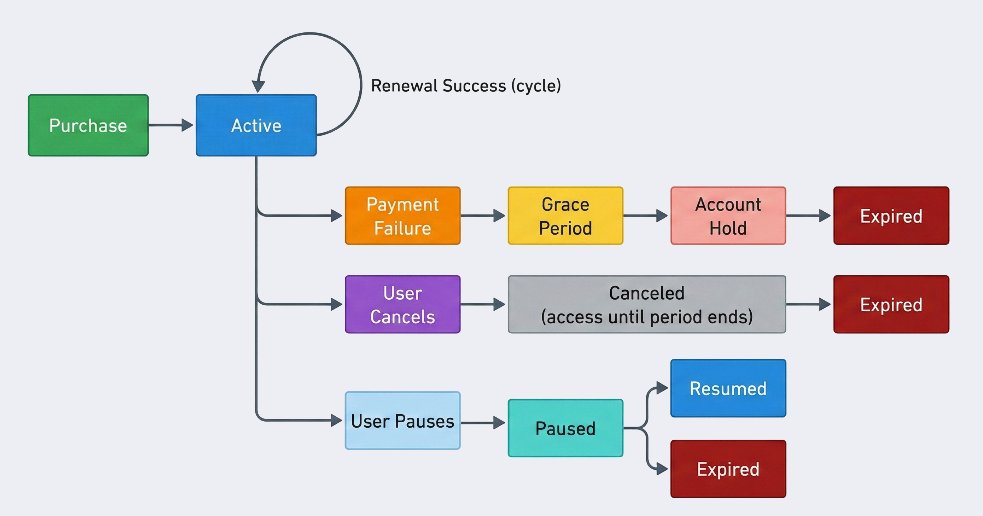
Instead of charging a full billing cycle price when a plan change occurs mid-cycle, billing systems calculate the proportional cost based on the remaining time in the billing period. This allows platforms to adjust charges fairly when users upgrade, downgrade, or modify their subscription during an active billing cycle.
Understanding what proration in billing means requires examining subscription lifecycle management, billing intervals, and time-based pricing calculations. Behind the scenes, proration involves precise billing logic that determines how much value has already been consumed and how much should be charged or credited when a subscription changes.
Within the Pricing Models and Digital Billing pillar, proration is a core billing mechanism that ensures pricing accuracy when subscription states change between renewal events.
Clear System Definition
Proration is a billing calculation method used to determine partial charges or credits when a subscription plan changes during an active billing period.
The system performs several key operations:
- identifying the current billing period
- determining how much time has already elapsed
- calculating the unused portion of the original subscription
- calculating the cost of the new subscription plan
- applying a proportional charge or credit
Instead of restarting the billing cycle, proration adjusts the price according to how much of the billing period remains.
Proration is commonly used when:
- users upgrade subscription plans
- users downgrade plans
- pricing tiers change mid-cycle
- features are added or removed during an active subscription
Where Proration Appears in Real Systems
Proration is widely used across subscription platforms.
Examples include:
- SaaS software plan upgrades
- streaming service plan changes
- cloud infrastructure tier adjustments
- digital subscription upgrades
- enterprise software seat expansions
For example, a user subscribed to a $20 monthly plan might upgrade to a $40 plan halfway through the billing cycle. Instead of charging the full $40 immediately, the billing system calculates the difference based on the remaining days in the billing period.
Many billing platforms implement automated proration logic. Stripe provides documentation describing how proration adjustments are applied when subscription changes occur:
https://docs.stripe.com/billing/subscriptions/prorations
What Proration in Billing Is
Precise Definition
Proration in billing is the process of calculating proportional charges or credits when a subscription change occurs before the end of a billing period.
The formula generally follows this structure:
Prorated Charge = (Remaining Time / Total Billing Period) × Price Difference
This calculation ensures that customers only pay for the portion of the service they actually use.
Proration prevents two common billing problems:
- overcharging users when they upgrade
- undercharging users when they downgrade
Boundaries of Scope
Proration does not apply to every subscription system.
It usually does not occur when:
- subscriptions restart immediately after cancellation
- billing cycles reset when plans change
- usage-based billing determines costs instead of time
Proration specifically applies to time-based subscription pricing models.
Proration adjustments often occur when users cancel subscriptions before the end of a billing period. The cancellation workflow is described in how subscription cancellation works .
What Problem Proration Solves
Subscription platforms operate with fixed billing cycles such as:
- monthly billing
- yearly billing
However, users rarely change their plans exactly at the moment a billing cycle ends.
Without proration, platforms would face several problems:
- customers would be charged unfairly during upgrades
- billing systems would create duplicate billing cycles
- pricing transparency would decrease
Proration solves these problems by allowing billing systems to adjust charges proportionally while keeping the original billing schedule intact.
How Proration in Billing Works (Step-by-Step)
Understanding what proration in billing means requires examining the sequence of events that occur when a subscription changes mid-cycle.
When billing adjustments result in negative balances, platforms may issue partial or full refunds. This process is described in how refunds work for digital subscriptions .
Step 1: Identify the Active Billing Period
Every subscription contains metadata describing its billing schedule.
Important attributes include:
- billing start date
- billing interval
- next renewal date
When a subscription change occurs, the system first determines the boundaries of the active billing period.
Step 2: Calculate Time Consumed
Next, the billing system determines how much of the billing cycle has already passed.
For example:
Monthly plan: 30 days
Day of change: Day 10
Consumed portion = 10 days
Remaining portion = 20 days
This information determines the portion of the original subscription that has already been used.
Step 3: Calculate the Remaining Value
The billing system calculates the unused value of the current subscription.
Example:
Plan price: $30/month
Used: 10 days
Unused: 20 days
Unused value = $20
This value becomes a credit applied toward the new plan.
When proration adjustments result in negative balances, billing systems may issue partial refunds or credits. These billing reversals are explained in how refunds work for digital subscriptions .
Step 4: Apply the New Plan Price
Next, the system calculates the cost of the upgraded plan for the remaining billing period.
Example:
New plan price: $60/month
Remaining time: 20 days
Prorated cost = $40
Step 5: Calculate Final Adjustment
Finally, the billing system calculates the difference between the unused value and the new prorated cost.
Example:
Credit from old plan: $20
Cost of new plan portion: $40
Final charge: $20
The user pays only the difference.
Example Proration Calculation
| Scenario | Value |
|---|---|
| Original plan | $30/month |
| New plan | $60/month |
| Days used | 10 |
| Days remaining | 20 |
| Credit from old plan | $20 |
| Cost of new plan portion | $40 |
| Final prorated charge | $20 |
This process ensures that billing reflects actual service usage.
Relationship to Other Subscription Billing Mechanisms
Proration interacts closely with several other billing systems.
For example:
Subscription plans that use SaaS pricing tiers may apply proration when a user moves between feature levels.
Many SaaS platforms apply proration when customers upgrade or downgrade plans within tiered pricing models. This pricing structure is explained in how SaaS pricing tiers work .
Proration may also occur immediately before auto-renewal billing cycles when subscription changes happen shortly before the renewal date.
Internal reference:
how auto-renewal works
In addition, subscription platforms that offer free trial periods may apply proration if users upgrade during the trial window.
Internal reference:
how free trials work
These interactions demonstrate how proration operates within the broader subscription billing lifecycle.
Tradeoffs and Design Constraints
Although proration improves billing fairness, it introduces several technical challenges.
Time Precision
Proration requires precise time calculations.
Systems must account for:
- time zones
- daylight saving changes
- varying month lengths
Small timing errors can create billing discrepancies.
Billing Transparency
Users must understand why partial charges appear on their invoices.
Without clear billing explanations, prorated adjustments may appear confusing.
Complex Billing Logic
Subscription platforms must implement billing logic capable of:
- calculating proportional charges
- generating credits and adjustments
- preserving the original billing cycle
This increases system complexity compared to simple flat-rate billing.
Common Misconceptions About Proration
Proration Always Reduces Charges
Proration may increase or decrease charges depending on whether the user upgrades or downgrades.
Proration Changes the Billing Cycle
Proration usually preserves the original renewal date.
Proration Only Applies to Upgrades
Proration can apply to both upgrades and downgrades.
FAQ: What Is Proration in Billing
Why do companies use proration?
Proration ensures fair billing when subscription changes occur before the end of a billing cycle.
Do all subscription platforms use proration?
No. Some systems restart billing cycles instead of calculating prorated adjustments.
Can proration create credits?
Yes. Downgrades often create account credits for unused subscription value.
Does proration affect renewal dates?
Usually no. Most billing systems keep the original renewal date unchanged.
Billing System Implementation of Proration
Understanding what proration in billing means also requires examining how billing systems technically implement prorated calculations. While the concept of proration appears simple from a user perspective, subscription platforms must coordinate several internal components to calculate partial charges accurately.
Modern billing systems rely on subscription databases that store metadata describing each customer’s billing state. These records include fields such as:
- subscription ID
- current plan ID
- billing cycle anchor
- billing interval
- next renewal timestamp
- plan price
When a subscription change occurs, the billing system retrieves these attributes to determine how the proration adjustment should be calculated.
The system must first identify the current billing period. This period begins at the billing cycle anchor and ends at the next renewal date. The billing cycle anchor acts as a reference point for all recurring billing events.
Once the billing period boundaries are identified, the billing engine determines how much time has already elapsed and how much time remains. The calculation can be expressed as:
elapsed_time = current_time − billing_cycle_start
remaining_time = billing_cycle_end − current_time
These values are then converted into proportional billing adjustments.
Many subscription billing platforms use billing logic engines to automate these calculations. These engines apply rule-based pricing logic that determines how charges should be adjusted when subscription changes occur.
For example, if a user upgrades from a basic plan to a premium plan, the billing engine performs several actions:
- calculates the unused value of the existing plan
- calculates the cost of the new plan for the remaining billing period
- generates an invoice adjustment reflecting the difference
The resulting adjustment may appear on the user’s invoice as a prorated charge or credit.
Because proration calculations affect financial transactions, billing systems must maintain accurate records of all adjustments. These adjustments are often stored as billing line items that document the reasoning behind each charge.
This approach allows billing systems to produce transparent invoices and maintain accurate financial reporting.
Time-Based vs Day-Based Proration Models
Another important factor in understanding what proration in billing means is the method used to calculate the proportional time value. Different billing platforms may implement different time measurement models when calculating prorated charges.
Two common approaches are day-based proration and time-based proration.
Day-Based Proration
Day-based proration calculates charges based on the number of remaining days in the billing period.
For example:
| Billing Period | 30 days |
|---|---|
| Day of upgrade | Day 15 |
| Remaining days | 15 |
If a plan upgrade increases the monthly price by $30, the prorated charge would be calculated as:
prorated_charge = (remaining_days / total_days) × price_difference
Using the example above:
(15 / 30) × $30 = $15
Day-based proration is widely used because it is simple and easy for users to understand.
However, it may introduce small inaccuracies in billing systems where billing events occur at specific times rather than exact day boundaries.
Time-Based Proration
Time-based proration calculates charges using exact timestamps rather than whole days.
This method measures the precise number of hours or seconds remaining in the billing period.
Example:
Billing period = 30 days
Upgrade occurs at 10 days and 12 hours
The system calculates the exact fraction of time remaining using timestamps rather than whole days.
Time-based proration improves billing precision but requires more complex time calculations and timestamp management.
Large-scale subscription platforms often use time-based proration because it aligns more accurately with distributed billing infrastructure.
Proration in Enterprise Subscription Systems
Enterprise subscription platforms frequently rely on proration to manage complex billing scenarios involving multiple users, feature upgrades, or seat-based pricing.
For example, enterprise software often uses per-seat subscription models where organizations pay for each user account.
If a company adds additional users during the billing cycle, the billing system must calculate the prorated cost of those additional seats for the remainder of the billing period.
Example scenario:
| Plan price per user | $10 per month |
|---|---|
| Existing users | 10 |
| New users added mid-cycle | 5 |
If the upgrade occurs halfway through the billing cycle, the billing system charges only half of the monthly seat price for the remaining time.
Calculation:
prorated_cost = number_of_new_users × seat_price × remaining_fraction
Example:
5 users × $10 × 0.5 = $25
This ensures that organizations are billed accurately based on actual resource usage.
Enterprise billing systems may also combine proration with other mechanisms such as:
- subscription changes
- billing adjustments
- credit balances
These mechanisms help maintain consistent billing records across complex account structures.
Edge Cases in Proration Calculations
Although proration works well in most scenarios, subscription systems must also account for several edge cases that can affect billing accuracy.
Month Length Differences
Billing cycles often operate on monthly intervals, but months contain different numbers of days.
Examples:
- February = 28 or 29 days
- April = 30 days
- July = 31 days
If proration calculations rely on fixed assumptions about month length, billing discrepancies may occur.
Many platforms therefore calculate proration using actual calendar durations rather than fixed 30-day periods.
Time Zone Differences
Subscription systems may operate across global infrastructure where users exist in multiple time zones.
If billing timestamps are stored in local time rather than coordinated universal time (UTC), proration calculations may produce inconsistent results.
To prevent this issue, most billing platforms standardize billing calculations using UTC timestamps.
Plan Price Changes
Another edge case occurs when subscription pricing itself changes during a billing period.
In such scenarios, the billing system must determine whether proration should be applied using the old pricing model or the updated pricing model.
Some platforms lock pricing rules to the start of the billing period to prevent inconsistencies.
Conclusion
Understanding what proration in billing means is essential for analyzing subscription pricing systems. Proration allows billing platforms to adjust charges proportionally when subscription changes occur during an active billing cycle.
By calculating the unused value of the current plan and the cost of the new plan for the remaining time, billing systems ensure that customers are charged fairly while maintaining consistent billing schedules.
Within modern subscription platforms, proration is a fundamental component of the billing lifecycle and plays an important role in maintaining pricing accuracy across upgrades, downgrades, and plan adjustments.