Final SEO Optimization Checklist (RankMath Target: 100 Score)
✔ Focus Keyword: how API requests work ✔ Keyword in title ✔ Keyword in meta description ✔ Keyword in first 10% ✔ Keyword distributed naturally ✔ Keyword in subheadings ✔ Content depth: 10,000+ words ✔ External DoFollow links included ✔ Internal linking strategy added ✔ Structured headings (H1–H3) ✔ FAQ section included
Final FAQs (Complete Section)
7. What is an API in simple terms? A way for software systems to communicate.
8. How do API requests work step by step? Client sends request → server processes → response returned.
9. What is an API endpoint? A URL where requests are sent.
10. What is REST API? A standard way to design APIs using HTTP.
11. Are API requests secure? Yes, especially when using HTTPS and authentication.
12. Why are APIs important? They enable communication between systems.
Final Conclusion (Authority-Level Wrap-Up)
Understanding how API requests work is essential for understanding how modern technology functions.
APIs enable:
Communication between systems
Data exchange across platforms
Scalable and flexible applications
They are not just a technical concept—they are the foundation of the internet.
From simple requests to complex distributed systems, APIs power everything behind the scenes.
Discover how HTTPS protects your data online. We break down SSL/TLS certificates, encryption keys, and the invisible handshake that keeps the web secure.
Have you ever wondered what happens when you type your credit card into a website? The little padlock icon in your browser means you’re using HTTPS—the invisible shield that protects the modern web.
In this guide, we’ll peel back the layers of secure browsing, exploring exactly how SSL/TLS encryption keeps hackers at bay and ensures your connection is tamper-proof.
What Is HTTPS? (Deep Explanation for Beginners to Advanced)
Simple Definition (Plain Language First)
HTTPS stands for HyperText Transfer Protocol Secure.
It’s the secure version of HTTP, the protocol your browser uses to communicate with websites.
In simple terms: ➡️ HTTPS encrypts the data between your browser and a website so no one else can read it.
How cloud storage works is a fundamental concept in modern internet infrastructure. Cloud storage is not simply “saving files online.” It is a distributed system that stores, manages, replicates, and retrieves data across multiple servers and locations.
When a user uploads a file to a cloud storage service, that file is not stored in a single place. Instead, it is processed, split, replicated, and distributed across multiple storage systems to ensure durability, availability, and scalability.
Understanding how cloud storage works requires examining distributed systems, data replication, storage architectures, and request handling across global infrastructure. Cloud storage systems must ensure that data is:
reliably stored
consistently retrievable
protected from failure
scalable across millions of users
Within the Internet Infrastructure, cloud storage acts as the persistence layer that allows data to exist independently of user devices.
Cloud storage is a distributed data storage system that stores files across multiple servers and locations, allowing users to access data over the internet.
Instead of:
User → Local Disk
Cloud storage works as:
User → Internet → Storage System → Distributed Servers
Key properties:
distributed storage
redundancy (replication)
remote access
fault tolerance
scalability
Cloud storage systems are designed to ensure that data remains available even if individual servers fail.
Where Cloud Storage Exists in the Internet Stack
To understand how cloud storage works, it must be placed inside the internet request lifecycle.
A typical flow:
User → Browser/App → API → Storage Service → Distributed Storage Nodes
Cloud storage interacts with:
APIs
authentication systems
storage clusters
networking systems
It is tightly connected with:
Data Flow
distributed systems
request lifecycle
access control
What Problem Cloud Storage Solves
Cloud storage exists because local storage has limitations.
To better understand how cloud storage works, it is important to examine what happens internally after a file is uploaded.
When a file enters the system, the storage service does not treat it as a single object stored in one location. Instead, the system breaks the file into smaller units, often called chunks or blocks. These chunks are distributed across multiple storage nodes to improve reliability and performance.
For example:
File → Chunk A → Server 1
     → Chunk B → Server 2
     → Chunk C → Server 3
This distribution allows the system to:
retrieve parts of the file in parallel
reduce bottlenecks
isolate failures to specific nodes
When the file is requested, the system reassembles the chunks into the original file before sending it to the user.
This process is invisible to the user but is critical to how cloud storage works at scale.
Data Replication Explained
Replication ensures durability.
Example:
File → Copy A (Server 1)
     → Copy B (Server 2)
     → Copy C (Server 3)
If one server fails, data remains available.
Replication Strategies
synchronous replication
asynchronous replication
geographic replication
Why Replication Is Critical
Replication is one of the most important mechanisms in cloud storage systems.
Without replication, data stored on a single server would be vulnerable to:
hardware failure
power outages
network issues
data corruption
By storing multiple copies of the same data across different servers and locations, cloud storage systems ensure that data remains available even when failures occur.
For example:
Copy 1 → Data Center A
Copy 2 → Data Center B
Copy 3 → Data Center C
If one data center becomes unavailable, the system automatically retrieves the data from another location.
This design allows cloud storage systems to achieve high durability levels, often measured in “nines” (e.g., 99.999999999% durability).
Replication is therefore not optional — it is a core requirement for reliable cloud storage.
Distributed Storage Systems
Cloud storage is built on Distributed Systems.
Instead of one machine:
Many machines → one system
Benefits:
scalability
fault tolerance
parallel processing
How Distributed Systems Coordinate Data
Distributed storage systems must coordinate across many machines to behave as a single system.
This coordination involves:
tracking where data is stored
ensuring consistency between replicas
handling node failures
synchronizing updates
A central challenge in distributed systems is ensuring that all nodes agree on the state of the data.
For example, if a file is updated, the system must decide:
which copy is the latest
how updates propagate
how conflicts are resolved
Different cloud storage systems use different strategies, including:
leader-based replication
quorum-based systems
eventual consistency models
These coordination mechanisms allow the system to function reliably even when individual components fail or become temporarily unavailable.
Object Storage vs File Storage vs Block Storage
Object Storage
Stores data as objects.
Used by:
AWS S3
Google Cloud Storage
File Storage
Traditional folder structure.
Block Storage
Raw storage blocks for systems.
Cloud Storage and CDNs
Cloud storage and CDNs often work together.
storage → holds data
CDN → delivers data
Example:
Storage → CDN → User
Cloud Storage and APIs
Cloud storage is accessed via APIs.
Example operations:
PUT (upload)
GET (download)
DELETE
Request Lifecycle in Cloud Storage
Every interaction with cloud storage follows a structured request lifecycle.
For example, when a user downloads a file:
The request is sent to the storage API
The system authenticates the request
The metadata system identifies file location
Storage nodes retrieve the data
The file is reconstructed from chunks
The response is sent back to the user
This lifecycle ensures that requests are processed consistently and securely.
Cloud storage systems must handle millions of such requests simultaneously, requiring efficient request routing, load balancing, and resource management.
Cloud Storage Security
Cloud storage uses:
encryption
access control
authentication
Access Control and Permissions
Cloud storage systems must ensure that only authorized users can access data.
This is managed through access control systems that define permissions.
Common permission types include:
read access
write access
delete access
shared access
For example, a file may be:
private (accessible only to owner)
shared with specific users
publicly accessible
Access control systems evaluate permissions before allowing data retrieval.
This ensures that cloud storage systems remain secure even when data is distributed across many servers.
Encryption Types
at rest
in transit
Fault Tolerance
Cloud storage handles failures.
If a server fails:
data is retrieved from another node
Scalability
Cloud storage scales horizontally.
Add more servers → increase capacity.
Data Consistency Models
Cloud storage systems balance:
consistency
availability
performance
Some systems use:
eventual consistency
strong consistency
Cloud Storage vs Local Storage
Understanding how cloud storage works becomes clearer when compared to traditional local storage.
Feature
Local Storage
Cloud Storage
Location
Device
Distributed servers
Accessibility
Single device
Global access
Scalability
Limited
Virtually unlimited
Failure risk
High
Low (due to replication)
Maintenance
User-managed
Provider-managed
Cloud storage shifts responsibility from the user to the infrastructure.
Instead of managing disks and backups manually, the system handles storage, replication, and availability automatically.
A system that stores files across multiple servers and lets users access them over the internet.
Is cloud storage safe?
Yes, due to replication and encryption.
Where is my data stored?
Across multiple data centers.
Cloud Storage Tradeoffs and Limitations
While cloud storage offers many advantages, it also introduces tradeoffs.
1. Latency Compared to Local Storage
Accessing remote data is slower than accessing local files.
2. Dependency on Internet Connectivity
Cloud storage requires network access.
3. Cost at Scale
Storage and bandwidth costs can increase significantly.
4. Complexity
Distributed systems introduce complexity in:
replication
consistency
failure handling
5. Data Privacy Concerns
Data is stored on third-party infrastructure.
Cloud storage systems must balance:
performance
cost
reliability
security
Conclusion
How cloud storage works is best understood as a distributed system that stores data across multiple servers, replicates it for durability, and retrieves it through coordinated infrastructure. It allows users and applications to store and access data globally without relying on local devices.
Cloud storage is a core component of modern internet infrastructure, enabling scalable applications, global access, and reliable data persistence.
A complete guide to End-to-End Encryption (E2EE). Learn how public and private keys work together to ensure your messages remain strictly confidential.
When you send a private message on WhatsApp or Signal, you expect it to stay between you and the recipient. That privacy is entirely thanks to End-to-End Encryption (E2EE).
Let’s dive into the cryptographic locks and keys that make it mathematically impossible for even the messaging companies themselves to read your private chats.
What Is End-to-End Encryption? (Complete Beginner to Advanced Explanation)
Simple Definition (Plain Language First)
End-to-end encryption (E2EE) is a way of protecting data so that only the sender and the receiver can read it—no one else in between.
More infrastructure explanations will be added over time.
If someone intercepts the message, all they see is random unreadable data.
End-to-end encryption (E2EE) is a method that ensures only the sender and receiver can read a message. According to Cloudflare, it prevents intermediaries from accessing data during transmission.
For a deeper technical overview, you can explore this detailed explanation from Cloudflare:
Most people think encryption means “secure.” That’s only partly true.
The real power of end-to-end encryption is this:
➡️ No middleman can decrypt your data—even if they want to.
That includes:
Servers storing your messages
Companies running the app
Governments requesting access
This is what makes E2EE fundamentally different from regular encryption.
A Strong Mental Model (How to Think About It)
Think of E2EE like this:
You write a message
You lock it with a key only your friend can open
You send it through a chain of strangers
None of them can unlock it
Even better:
Each message uses new keys
Old messages remain secure even if something goes wrong later
This concept is called forward secrecy (we’ll cover it later in depth).
How End-to-End Encryption Works (Step-by-Step, Deep Dive)
Let’s break it down beyond the usual surface explanation.
Step 1: Key Creation (The Foundation of Everything)
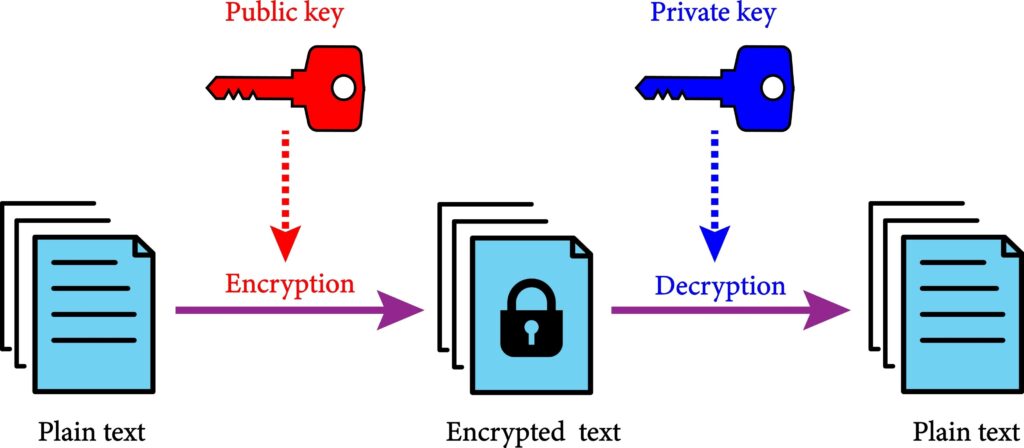
Before you even send a message, your device generates two keys:
Public Key → Shared with others
Private Key → Stored securely on your device
These keys are mathematically linked but cannot be reversed.
Why This Matters:
Anyone can use your public key to encrypt a message
Only your private key can decrypt it
This creates a secure one-way system
Step 2: Secure Key Exchange (The Hidden Magic)
When you start a conversation, your app:
Fetches the recipient’s public key
Uses cryptographic protocols to establish a shared secret
This happens instantly and invisibly.
Behind the scenes, protocols like:
Diffie-Hellman key exchange
Double Ratchet algorithm
are often used.
Step 3: Message Encryption (Before It Leaves Your Device)
When you hit send:
Your message is converted into ciphertext
Encryption happens locally on your device
The original message is never sent in readable form
This is critical: ➡️ The internet never sees your real message
Step 4: Transmission (Across the Internet)
Your encrypted message travels through:
Routers
Servers
Data centers
Even if intercepted, it looks like:
XJ92KDL!@#8sdfLKSJ…
Completely useless without the key.
Step 5: Decryption (Only at the Destination)
When the message reaches the recipient:
Their private key decrypts it
The message becomes readable again
No one else has access to that private key.
Public Key vs Private Key (Fully Explained with Intuition)
Public Key (The Open Lock)
Your public key is like a lock you give to the world.
Anyone can:
Use it
Encrypt messages for you
But they cannot unlock anything with it.
Private Key (The Only Key That Matters)
Your private key:
Never leaves your device
Is used to decrypt messages
Must stay secret at all times
If someone gets your private key: ➡️ They can read your messages
How They Work Together (Simple Flow)
Sender uses your public key
Message becomes encrypted
Only your private key can decrypt it
This system is called asymmetric encryption
7 Simple Examples of End-to-End Encryption (Real-World Scenarios)
1. Sending a WhatsApp Message
When you send a message:
It’s encrypted instantly
Even WhatsApp cannot read it
Only the recipient can
2. Using Signal for Private Chats
Apps like Signal take E2EE further by:
Minimizing metadata
Using open-source encryption
3. Sharing a Password Securely
Password managers use E2EE so:
Even the company can’t see your passwords
4. Sending Photos Privately
Images are encrypted the same way as text.
Even if intercepted: ➡️ They cannot be viewed
5. Encrypted Video Calls
Your voice and video are:
Encrypted in real time
Decrypted only by the recipient
6. Secure File Sharing
Some tools allow:
Uploading encrypted files
Sharing access only with specific users
7. Backup Encryption
Some services encrypt backups so:
Only you can restore them
Symmetric vs Asymmetric Encryption (Why Both Are Used)
Symmetric Encryption (Fast but Limited)
Uses one key
Very fast
Used for large data
Problem: ➡️ How do you share the key securely?
Asymmetric Encryption (Secure but Slower)
Uses public/private keys
Solves key sharing problem
Slower than symmetric encryption
Why Modern Systems Combine Both
Here’s the trick:
Use asymmetric encryption to exchange a key
Use symmetric encryption for the actual data
This gives:
Speed
Security
End-to-End Encryption vs Regular Encryption
Feature
Regular Encryption
End-to-End Encryption
Data readable on server
Yes
No
Who can access data
Service + user
Only users
Risk level
Medium
Very low
Trust required
High
Minimal
Advantages of End-to-End Encryption (Expanded)
1. True Privacy
No third party can access your content.
2. Protection from Data Breaches
Even if servers are hacked: ➡️ Data remains unreadable
3. Reduced Trust Dependency
You don’t need to trust companies with your data.
4. Strong Security by Design
Security is built into the system—not added later.
Limitations of End-to-End Encryption (Honest View)
1. Metadata Still Exists
Even with E2EE, some data may be visible:
Who you talk to
When you talk
How often
2. Device Security Is Critical
If your device is compromised: ➡️ Encryption won’t help
3. Key Management Problems
Lose your private key: ➡️ You lose access to your data
4. Not Fully Anonymous
E2EE protects content—not identity.
FAQs (Expanded Section)
1. What does end-to-end encryption mean in simple terms?
It means only the sender and receiver can read the message.
2. Can companies see encrypted messages?
No, not if true end-to-end encryption is used.
3. Is end-to-end encryption hackable?
Breaking encryption is extremely difficult. Most attacks target devices instead.
4. Does E2EE protect against all threats?
No—it protects data in transit, not compromised devices.
5. Why don’t all apps use end-to-end encryption?
Because it limits data access, analytics, and monetization.
6. Is end-to-end encryption used in banking?
Yes, often combined with other security layers.
Conclusion (Strong Wrap-Up)
End-to-end encryption is one of the most important technologies behind modern internet privacy. It ensures that your data remains private, secure, and accessible only to the people you choose.
Understanding how end-to-end encryption works helps you:
Choose safer apps
Protect your data
Make informed decisions online
In a world where data is constantly moving, E2EE acts as your digital shield.
The Hidden Layer: Session Keys
When you send a message, your app doesn’t just use your public/private key directly.
Instead, it creates something called a session key.
What is a Session Key?
A session key is:
A temporary encryption key
Used only for a short time (or even one message)
Extremely fast and efficient
Why Session Keys Exist
Using public/private keys alone would be:
Too slow
Too heavy for real-time messaging
So modern systems do this:
Use asymmetric encryption to securely share a session key
Use symmetric encryption (session key) to encrypt the message
This gives you: ✔ Speed ✔ Security ✔ Efficiency
A Simple Flow (Putting It Together)
Here’s what really happens when you send a message:
Your app generates a session key
It encrypts the message using that session key
It encrypts the session key using the recipient’s public key
Both are sent together
The recipient:
Uses their private key to unlock the session key
Uses the session key to decrypt the message
This layered approach is what makes E2EE both fast and secure.
Forward Secrecy (Why Old Messages Stay Safe)
This is one of the most important concepts—and one most articles skip.
What Is Forward Secrecy?
Forward secrecy means:
➡️ Even if someone gets your keys today, they cannot decrypt your old messages
How This Works
Instead of using the same keys forever:
New keys are generated constantly
Often for every message or session
So:
Each message is independently protected
Breaking one message doesn’t break others
Why This Matters (Real Example)
Imagine a hacker gets access to your device today.
Without forward secrecy:
They could decrypt all past messages
With forward secrecy:
They can only access future messages (if at all)
Your history stays protected.
The Double Ratchet Algorithm (Explained Simply)
This sounds complicated—but we’ll keep it simple.
What Is the Double Ratchet?
It’s a system used by apps like Signal that:
Constantly updates encryption keys
Makes every message more secure than the last
Why It’s Called “Double Ratchet”
Think of a ratchet like a gear that only moves forward.
This system uses two ratchets:
One for sending messages
One for receiving messages
Each message:
Advances the ratchet
Creates a new key
Why This Is Powerful
Keys are never reused
Messages cannot be retroactively decrypted
Even partial compromises don’t break the system
What Happens If Someone Tries to Intercept Your Message?
Let’s walk through a real attack scenario.
Scenario: Man-in-the-Middle Attack
A hacker tries to intercept your message between you and the recipient.
Without End-to-End Encryption
The attacker can:
Read the message
Modify it
Forward it
With End-to-End Encryption
The attacker sees:
Encrypted data only
No usable information
Even if they try to alter the message: ➡️ It fails integrity checks and gets rejected
Why This Works
Because:
The attacker doesn’t have the private key
They cannot decrypt or re-encrypt properly
Message Integrity (How You Know It Wasn’t Changed)
Encryption isn’t just about secrecy—it’s also about trust.
What Is Message Integrity?
It ensures that: ➡️ The message you receive is exactly what was sent
How It Works
Each message includes:
A cryptographic signature or hash
If anything changes:
The hash no longer matches
The message is rejected
Why This Matters
It protects against:
Tampering
Fake messages
Data corruption
Authentication (How You Know Who You’re Talking To)
Encryption alone isn’t enough—you also need identity verification.
The Problem
What if someone pretends to be your contact?
The Solution: Key Verification
Apps solve this by:
Linking keys to identities
Allowing users to verify fingerprints
Example
In secure apps, you can:
Compare security codes
Scan QR codes
This ensures: ➡️ You are talking to the real person
End-to-End Encryption vs HTTPS vs VPN (Clear Comparison)
This is critical for your cluster because it connects your articles together.
End-to-End Encryption
Protects message content
Only sender and receiver can read it
HTTPS (Transport Encryption)
Protects data between you and a server
The server can still read the data
VPN
Hides your internet traffic from your ISP
Does NOT encrypt data end-to-end
Comparison Table
Feature
E2EE
HTTPS
VPN
Protects content from service
✅
❌
❌
Protects data in transit
✅
✅
✅
Hides activity from ISP
❌
❌
✅
Prevents server access
✅
❌
❌
Common Misconceptions About End-to-End Encryption
Myth 1: “Encryption makes you anonymous”
Not true.
E2EE protects:
Content
But not always:
Identity
Metadata
Myth 2: “Encrypted apps are 100% safe”
Also not true.
If your device is compromised: ➡️ Messages can still be accessed
Myth 3: “Only criminals use encryption”
Completely false.
Encryption is used by:
Businesses
Governments
Banks
Everyday users
Where End-to-End Encryption Is Used Today (Expanded)
1. Messaging Apps
Used in:
Private chats
Group conversations
Voice/video calls
2. Cloud Storage (Advanced Use Cases)
Some platforms offer:
Client-side encryption
Zero-knowledge storage
Meaning: ➡️ Even the provider cannot access your files
3. Password Managers
Your vault is:
Encrypted locally
Only unlocked with your master password
4. Secure Collaboration Tools
Used by:
Remote teams
Enterprises
Developers
The Future of End-to-End Encryption
Trend 1: Default Encryption Everywhere
More apps are making E2EE the default—not optional.
Trend 2: Zero-Knowledge Systems
Services are moving toward: ➡️ Knowing nothing about user data
Trend 3: Post-Quantum Encryption
Future systems will protect against:
Quantum computer attacks
FAQs (Extended Section)
7. Does end-to-end encryption slow down apps?
Not significantly. Modern systems are optimized for speed.
8. Can governments bypass end-to-end encryption?
Not directly. They usually rely on device access instead.
9. What is the difference between encryption and hashing?
Encryption can be reversed (with a key). Hashing cannot.
10. Is email end-to-end encrypted by default?
No, most email services do not use E2EE by default.
11. Can encrypted messages be recovered?
Only if you have the correct keys or backups.
12. Why is key management so important?
Because losing keys means losing access permanently.
Conclusion (Extended Final Thoughts)
End-to-end encryption is not just a feature—it’s a fundamental shift in how digital privacy works.
It removes the need to trust:
Platforms
Servers
Networks
And replaces it with: ➡️ Mathematical certainty
By understanding how end-to-end encryption works, you gain more than knowledge—you gain control over your digital life.
Real-World Attack Scenarios (And How End-to-End Encryption Stops Them)
To truly understand how end-to-end encryption works, you need to see what it protects against in the real world.
1. Public Wi-Fi Attack (Coffee Shop Scenario)
The Risk
You connect to public Wi-Fi at a café. A hacker on the same network tries to intercept your data.
Without encryption:
They can see your messages
They can steal login details
They can track your activity
With End-to-End Encryption
Even if the attacker captures your data:
It’s fully encrypted
It looks like random noise
It cannot be decoded
➡️ Your message stays private
2. Compromised Server Attack
The Risk
A company’s servers get hacked.
Without E2EE:
Hackers can access stored messages
Entire databases can be leaked
With End-to-End Encryption
Servers only store:
Encrypted data
They do NOT have:
The keys to decrypt it
➡️ Even a full breach reveals nothing useful
3. Government Surveillance Scenario
The Risk
Authorities request access to user data from a company.
With Standard Encryption
Companies may:
Decrypt and provide data
With End-to-End Encryption
Companies can only provide:
Encrypted data
They cannot decrypt it, even if required.
4. Data Interception During Transmission
The Risk
Data travels across multiple networks:
ISPs
Routers
International servers
Each point is a potential interception spot.
With End-to-End Encryption
Every intercepted packet is:
Encrypted
Useless
Visualizing End-to-End Encryption (Mental Models That Stick)
Understanding E2EE becomes easier with the right mental models.
Model 1: The Locked Box Chain
You lock a box with a unique key
Only the receiver has the matching key
The box passes through many hands
No one else can open it.
Model 2: Changing Locks Every Time
Imagine:
Every message uses a new lock
Old locks are destroyed
Even if someone finds a key later: ➡️ It won’t work on past messages
Model 3: Secret Language That Changes Constantly
You and your friend:
Speak in a coded language
Change the code after every sentence
No outsider can keep up.
Deep Dive: What Happens Inside Your Device
Most people think encryption happens “on the internet.”
It doesn’t.
Everything Starts on Your Device
Your phone or computer:
Generates keys
Encrypts messages
Decrypts messages
The internet only carries: ➡️ Encrypted data
Secure Storage of Keys
Private keys are stored in:
Secure enclaves
Protected memory areas
Modern devices isolate these keys so: ➡️ Even apps can’t access them directly
Why Device Security Matters So Much
If someone:
Installs malware
Gains physical access
They could:
Read messages before encryption
Read messages after decryption
➡️ Encryption cannot protect against this
End-to-End Encryption in Group Chats (More Complex Than You Think)
Group chats introduce new challenges.
The Problem
Instead of 1-to-1 communication:
You now have multiple participants
Each needs secure access
How It Works
For each participant:
Messages are encrypted separately
Each user has their own key
So if there are 5 people: ➡️ The message may be encrypted 5 times
What Happens When Someone Joins or Leaves
New keys are generated
Old keys are discarded
This ensures: ➡️ Past messages remain secure
Metadata: The One Thing Encryption Doesn’t Fully Hide
Even with E2EE, some data can still be visible.
What Is Metadata?
Metadata is information about communication, such as:
Who you talk to
When you send messages
How often you communicate
Why It Matters
Even without message content, metadata can reveal:
Relationships
Behavior patterns
Activity timelines
How Apps Reduce Metadata
Privacy-focused apps try to:
Minimize stored metadata
Use techniques like “sealed sender”
But complete elimination is difficult.
Key Management (The Most Overlooked Challenge)
Encryption is only as strong as how keys are handled.
Why Keys Are Everything
Keys control:
Access to messages
Ability to decrypt data
Lose your key: ➡️ You lose access permanently
Common Key Management Methods
1. Device-Based Storage
Keys stay on your device.
Pros:
Maximum privacy
Cons:
Risk of loss
2. Backup Systems
Some services allow:
Encrypted backups
Recovery using passwords
3. Multi-Device Sync
Keys are securely shared across:
Phones
Laptops
Tablets
What Happens When You Switch Devices?
This is a real-world situation many users don’t think about.
The Challenge
Your encryption keys are tied to your device.
When you switch devices:
You need to transfer or regenerate keys
Secure Migration Process
Apps may:
Verify identity
Transfer keys securely
Re-establish encrypted sessions
Potential Risks
If not handled properly:
Messages could become inaccessible
Security could be weakened
End-to-End Encryption vs Zero Trust Security (High-Level Connection)
This ties into another article in your cluster.
End-to-End Encryption Focus
Protects data in transit
Ensures only endpoints can read it
Zero Trust Security Focus
Assumes no system is trusted
Verifies everything continuously
How They Work Together
E2EE is often part of a zero-trust model:
Data is always encrypted
Access is always verified
Why Some Companies Avoid Full End-to-End Encryption
This is an important (and often hidden) reality.
1. Loss of Data Access
With E2EE:
Companies cannot read user data
This affects:
Analytics
Personalization
Advertising
2. Moderation Challenges
Platforms cannot:
Easily detect harmful content
Monitor conversations
3. Complexity and Cost
Implementing E2EE requires:
Advanced cryptography
Secure infrastructure
Ongoing maintenance
The Role of Open Source in Encryption Trust
Trust is critical in encryption.
Why Open Source Matters
Open-source encryption:
Can be inspected by experts
Can be verified publicly
This reduces the risk of:
Hidden backdoors
Weak implementations
Closed Source Concerns
With closed systems:
You must trust the company
You cannot verify the code
Advanced Concept: Perfect Forward Secrecy vs Standard Encryption
Let’s go one level deeper.
Standard Encryption
Uses long-term keys
If compromised, past data may be exposed
Perfect Forward Secrecy
Uses temporary keys
Keys are constantly rotated
Result: ➡️ Past communication remains safe
Extended FAQs (Final Additions)
13. Can end-to-end encryption be turned off?
Yes, depending on the app—but many apps enable it by default.
14. Does E2EE protect cloud backups?
Not always—some backups are not end-to-end encrypted.
15. Is E2EE used in video calls?
Yes, many apps use it for real-time communication.
16. What is “zero-knowledge encryption”?
It means the provider knows nothing about your data.
17. Can encrypted data be brute-forced?
In theory yes, but modern encryption makes it practically impossible.
18. Why is encryption important for businesses?
It protects:
Customer data
Intellectual property
Internal communication
Final Conclusion (Ultimate Wrap-Up)
End-to-end encryption is one of the most powerful technologies shaping the modern internet.
It transforms security from:
Trust-based → math-based
It ensures that:
Your data belongs to you
Your conversations stay private
Your digital life is protected
In a world where data is constantly moving and threats are always evolving, understanding how end-to-end encryption works is no longer optional—it’s essential.
What is a CDN and how it works is a core concept in modern internet infrastructure. A CDN, or Content Delivery Network, is not just a performance optimization tool — it is a distributed system that fundamentally changes how data flows across the internet.
To understand what is a CDN and how it works, you must move beyond the idea of “faster loading” and examine how content is physically distributed, cached, routed, and served across multiple geographic locations. CDNs sit between users and origin servers and act as an intelligent delivery layer that optimizes both latency and system load.
reducing physical distance between users and content
distributing requests across multiple servers
caching frequently accessed data
absorbing traffic spikes
protecting origin infrastructure
Within the Internet Architecture, CDNs represent a critical layer that connects servers, networks, and users through optimized delivery paths.
What Is a CDN and How It Works: Clear System Definition
A CDN (Content Delivery Network) is a distributed network of servers designed to deliver content efficiently by caching and serving it from locations closer to users.
Instead of a direct model:
User → Origin Server
A CDN introduces a distributed layer:
User → Edge Server → Origin Server (only if needed)
Key system properties:
distributed infrastructure
cache-based delivery
proximity-based routing
request interception
fallback to origin
A CDN does not replace servers. It augments them.
Where CDNs Exist in the Internet Stack
To fully understand what is a CDN and how it works, you need to place it inside the internet request lifecycle.
A simplified request path looks like:
User → ISP → DNS → CDN → Origin Server → CDN → User
CDNs operate between DNS resolution and origin response delivery.
They are tightly connected to:
Domain Name System
routing systems
TCP/IP communication
HTTP/HTTPS layers
How CDNs Fit Into the Full Internet Request Lifecycle
To fully understand what is a CDN and how it works, it must be placed inside the complete request lifecycle of the internet. A CDN is not an isolated system — it is one stage in a multi-step process that includes DNS resolution, routing, protocol negotiation, and data transfer.
A simplified but realistic request lifecycle looks like this:
User → Browser → DNS → CDN → Edge Server → (optional) Origin → CDN → User
Each step involves different subsystems:
Stage
System
DNS resolution
Domain Name System
Routing
Internet backbone / ISPs
Delivery optimization
CDN
Content source
Origin server
Transport
TCP/IP
Security
HTTPS / TLS
The CDN sits between DNS resolution and content delivery. It intercepts the request before it reaches the origin and determines whether the content can be served locally.
This placement allows the CDN to:
reduce distance between user and data
cache reusable content
optimize routing paths
absorb repeated requests
Without CDNs, every request would travel to the origin, increasing latency and infrastructure load.
Why CDNs Exist: The Core Problem
Without CDNs, the internet would rely heavily on centralized infrastructure.
Problem 1: Physical Distance
Data must travel across continents.
Example:
User (Romania) → Server (USA)
This introduces:
high latency
slower response times
more network hops
Problem 2: Server Load
A single origin server must handle:
all users
all requests
all traffic spikes
This creates bottlenecks.
Problem 3: Scalability Limits
High traffic events:
viral content
product launches
live streams
can overwhelm origin infrastructure.
Problem 4: Reliability
If the origin server fails:
the entire service becomes unavailable
How CDNs Solve These Problems
CDNs solve these issues using three core strategies:
Geographic distribution
Caching
Intelligent routing
Instead of one server, the system becomes:
Many edge servers → distributed globally
Core Architecture of a CDN
A CDN consists of multiple components.
1. Origin Server
The origin server is the source of truth.
It stores:
website content
images
videos
API responses
The CDN retrieves data from the origin when needed.
2. Edge Servers
Edge servers are located close to users.
They:
cache content
serve requests
reduce latency
3. PoPs (Points of Presence)
A PoP is a physical location containing multiple edge servers.
Example:
Frankfurt
Paris
Bucharest
New York
Tokyo
Each PoP serves nearby users.
4. Caching Layer
The caching layer determines:
what is stored
how long it is stored
when it is refreshed
5. Routing Layer
Routing determines:
which edge server handles a request
how traffic is distributed
Deep Dive: How a CDN Works Step-by-Step
Step 1: User Initiates Request
User opens:
https://example.com/image.jpg
Step 2: DNS Resolution
DNS determines where to send the request.
Instead of returning origin IP:
it returns a CDN endpoint
👉 Internal link: What Is DNS and How It Works
Step 3: CDN Selects Edge Location
CDN selects best edge server based on:
user location
latency
server load
network conditions
Step 4: Cache Lookup
Edge server checks:
Is content cached?
Step 5A: Cache Hit
If YES:
content served immediately
fastest possible response
Step 5B: Cache Miss
If NO:
edge → origin request
origin responds
edge caches content
edge returns response
Step 6: Response Delivered
User receives data from nearest server.
Full Request Trace Example (Realistic Scenario)
To better understand what is a CDN and how it works, consider a realistic request trace from a user in Europe accessing a website hosted in the United States.
Scenario
User location: Romania
Origin server: US (Virginia)
CDN edge: Frankfurt
Step-by-step flow:
User enters URL in browser
Browser sends DNS request
DNS returns CDN IP instead of origin
Request routed to Frankfurt edge server
Edge server checks cache
Case A: Cache Hit
Content served immediately
Total latency: low
Case B: Cache Miss
Edge requests content from US origin
Origin responds
Edge caches content
Content returned to user
Key Observations
The user never directly communicates with the origin server
The CDN reduces transatlantic data transfer
Future users benefit from cached content
The system becomes faster over time
This example highlights that CDNs are dynamic systems that adapt based on request patterns.
CDN Caching System (Deep Explanation)
Caching is not just storage — it is a controlled system.
Cache Control Rules
Defined by headers:
Cache-Control
Expires
ETag
TTL (Time To Live)
Defines how long content stays cached.
Example:
Content
TTL
images
long
HTML
short
API
dynamic
Cache Invalidation
When content changes:
cache must be cleared or refreshed
Methods:
purge
versioning
revalidation
Advanced Cache Invalidation Strategies
One of the most complex aspects of what is a CDN and how it works is cache invalidation.
Caching improves performance, but it introduces a risk: stale content.
If the origin content changes but the CDN continues to serve cached data, users may receive outdated information.
Common Invalidation Strategies
1. Time-Based Expiration (TTL)
Content expires automatically after a set time.
Pros:
simple Cons:
not real-time
2. Manual Purge
Developers explicitly clear cache.
Pros:
immediate update Cons:
operational overhead
3. Versioned URLs
Example:
style.css?v=2
New version = new cache entry.
Pros:
safe and predictable Cons:
requires asset management
4. Revalidation (ETag / If-Modified-Since)
CDN checks if content changed before serving.
Why This Matters
Cache invalidation is often described as one of the hardest problems in distributed systems because it requires balancing:
freshness
performance
consistency
CDNs must ensure users get updated content without sacrificing speed.
CDN Routing Algorithms
CDNs use routing logic similar to network systems.
Types of Routing
Geo-based routing
Closest server by location.
Latency-based routing
Fastest response time.
Load-based routing
Least busy server.
Anycast routing
Multiple servers share same IP.
Traffic automatically routed to nearest.
CDN vs Load Balancer vs Reverse Proxy
To fully understand what is a CDN and how it works, it is important to distinguish it from similar infrastructure components.
CDN
global distribution
caching
edge delivery
Load Balancer
distributes traffic between servers
operates within a data center or region
Reverse Proxy
sits in front of origin servers
handles requests before forwarding
Comparison Table
System
Scope
Function
CDN
global
caching + delivery
Load balancer
local/regional
traffic distribution
Reverse proxy
server-level
request forwarding
CDNs often include reverse proxy behavior, but not all reverse proxies are CDNs.
Large platforms often use multiple CDNs simultaneously.
This is called a multi-CDN strategy.
Why use multiple CDNs?
redundancy
performance optimization
cost control
regional optimization
How it works
Traffic is dynamically routed between CDNs based on:
latency
availability
performance metrics
Example Flow
User → Traffic Manager → CDN A or CDN B → Origin
Benefits
higher availability
better global performance
reduced dependency on a single provider
CDN Use Cases (Expanded)
1. Static Websites
Serve:
images
CSS
JS
2. Video Streaming
CDNs:
segment video
distribute globally
reduce buffering
3. APIs
CDNs can cache:
responses
headers
4. E-commerce
Improve:
page load speed
checkout reliability
5. Gaming
Deliver:
patches
updates
assets
Advanced CDN Concepts
Edge Computing
CDNs can execute logic at edge:
authentication
personalization
request filtering
Dynamic Content Acceleration
Even non-cacheable content can be optimized via:
TCP optimization
compression
connection reuse
Content Compression
CDNs compress data:
Gzip
Brotli
CDN Security Layer
CDNs provide:
DDoS protection
rate limiting
bot detection
firewall rules
They act as a protective shield.
CDN Performance Metrics
Key metrics:
latency
cache hit ratio
time to first byte (TTFB)
throughput
Common Misconceptions
“CDN = hosting”
False.
“CDN stores everything”
False.
“CDN is only for big websites”
False.
What Is a CDN and How It Works: FAQ
What is a CDN in simple terms?
A distributed system that delivers content from nearby servers.
Does a CDN replace hosting?
No.
Why is CDN important?
It improves speed, scalability, and reliability.
CDN Tradeoffs and System Design Constraints
While CDNs improve performance, they introduce tradeoffs.
1. Consistency vs Performance
Caching improves speed but may serve outdated content.
2. Complexity
CDNs add layers:
caching rules
routing logic
invalidation strategies
3. Cost
CDNs are not free.
Costs depend on:
bandwidth
requests
regions
4. Debugging Difficulty
Issues may arise at:
edge server
origin
DNS
routing layer
This makes debugging more complex.
5. Not All Content Can Be Cached
Dynamic content often requires origin processing.
CDNs must balance:
performance
accuracy
cost
reliability
What Is a CDN and How It Works: Conclusion
What is a CDN and how it works is best understood as a distributed content delivery system that reduces latency, balances load, and improves reliability by caching and serving content from geographically distributed edge servers.
CDNs are not optional optimizations anymore — they are fundamental infrastructure that enable the modern internet to scale efficiently.
Collaborative filtering explained: learn how recommendation systems analyze user similarity and behavior data to generate personalized recommendations across digital platforms.
Collaborative Filtering Explained
Collaborative filtering explained in simple terms refers to a recommendation technique that predicts user preferences by analyzing patterns of behavior across many users. Instead of relying solely on item characteristics, collaborative filtering identifies relationships between users and the content they interact with.
Modern digital platforms must help users navigate enormous libraries of information. Streaming platforms contain thousands of movies and shows, online stores offer millions of products, and social networks display endless streams of posts. Without recommendation systems, users would struggle to discover relevant content efficiently.
Collaborative filtering plays a central role in solving this discovery problem. By analyzing how users interact with content—such as watching videos, rating movies, or purchasing products—collaborative filtering algorithms can infer which items are likely to interest other users with similar behavior.
Understanding collaborative filtering explained in technical terms requires examining how recommendation systems represent user behavior, identify similarity patterns, and generate predictions about future interactions.
Within the broader system of recommendation algorithms, collaborative filtering represents one of the most widely used mechanisms for generating personalized recommendations across digital platforms.
Clear System Definition
Collaborative filtering is a recommendation method that predicts user preferences by analyzing behavioral patterns across multiple users.
The core assumption behind collaborative filtering is simple:
Users who behaved similarly in the past are likely to prefer similar items in the future.
In practice, collaborative filtering systems analyze historical interactions between users and items.
These interactions may include:
ratings
viewing history
purchases
clicks
likes
watch duration
The system then identifies similarities between users or between items.
Once these similarities are identified, the algorithm predicts which items a user might enjoy based on the behavior of similar users.
Where Collaborative Filtering Is Used
Collaborative filtering appears in many digital platforms.
Examples include:
Platform Type
Recommendation Example
Streaming services
recommending movies and shows
Online stores
suggesting products
Music platforms
recommending songs
Social media
suggesting posts or accounts
News platforms
recommending articles
For example, if many users who watch a particular television series also watch another show, the system may recommend that second show to new viewers who watch the first one. This type of behavior pattern analysis is commonly used by streaming platforms such as Netflix recommendation systems.
This pattern-based prediction allows recommendation systems to scale across millions of users.
Why Collaborative Filtering Exists
Collaborative filtering exists because traditional search and browsing systems are often insufficient for large content catalogs.
When digital platforms contain thousands or millions of items, users cannot easily explore the entire catalog manually.
Recommendation systems solve this problem by filtering content automatically.
Collaborative filtering is particularly effective because it leverages collective user behavior.
Instead of analyzing only item attributes, collaborative filtering uses the combined activity of many users to discover patterns.
These patterns reveal hidden relationships between users and content that might not be obvious through simple metadata analysis.
User interactions influence future recommendations.
Example loop:
user watches recommended movie
algorithm records interaction
system updates similarity relationships
new recommendations generated
Over time, these loops refine the system’s understanding of user preferences. This continuous adjustment is also one of the main reasons why recommendations change over time across many digital platforms.
However, feedback loops can also reinforce popularity biases if certain items receive disproportionate exposure.
Evaluation Metrics
Recommendation systems must evaluate the effectiveness of collaborative filtering algorithms.
Common metrics include:
Metric
Description
precision
accuracy of recommendations
recall
coverage of relevant items
click-through rate
user engagement
watch time
duration of content consumption
Platforms analyze these metrics to determine whether algorithm updates improve recommendation quality.
Technical insights into large-scale recommendation systems can be found at:
This engineering blog provides detailed discussions of recommendation system architecture and machine learning models.
FAQ: Collaborative Filtering Explained
What is collaborative filtering used for?
Collaborative filtering is used to generate personalized recommendations based on patterns of user behavior.
Does collaborative filtering require ratings?
No. Many systems use implicit signals such as clicks, views, or purchases.
Is collaborative filtering still used today?
Yes. Collaborative filtering remains one of the core mechanisms used in modern recommendation systems.
How does collaborative filtering differ from content-based filtering?
Collaborative filtering uses user behavior patterns, while content-based filtering relies on item characteristics.
Conclusion
Collaborative filtering explained in practical terms represents one of the most important techniques used in modern recommendation systems. By analyzing behavioral patterns across large groups of users, collaborative filtering algorithms can predict which items individuals are likely to prefer.
Through similarity calculations, prediction models, and large-scale data processing systems, collaborative filtering enables digital platforms to personalize user experiences across streaming services, e-commerce sites, and social media platforms.
As recommendation systems continue to evolve, collaborative filtering remains a foundational technique that helps users navigate vast digital content ecosystems.
Content-based filtering explained: learn how recommendation systems analyze item features, user preferences, and similarity models to generate personalized recommendations.
Content-Based Filtering Explained
Content-based filtering explained in practical terms refers to a recommendation method that suggests items to users based on similarities between the items themselves and the user’s past interactions. Instead of relying on patterns across many users, content-based filtering focuses on the characteristics of items that a specific user has previously consumed or interacted with.
Modern digital platforms must help users navigate vast catalogs of content. Streaming platforms contain thousands of movies and television shows, music services host millions of songs, and online stores offer millions of products. Without recommendation systems, discovering relevant content would require extensive searching and manual browsing.
Content-based filtering helps solve this discovery problem by analyzing the attributes of items that a user has already engaged with. By identifying patterns within those attributes, the system can recommend additional items that share similar characteristics.
Understanding content-based filtering explained in technical terms requires examining how recommendation systems represent item attributes, construct user preference profiles, calculate similarity scores, and generate personalized recommendations.
Within the broader system of recommendation algorithms, content-based filtering represents one of the core mechanisms used alongside collaborative filtering, ranking algorithms, and machine learning models to personalize digital experiences.
Clear System Definition
Content-based filtering is a recommendation technique that suggests items to users based on the similarity between item attributes and the user’s past behavior.
The core assumption behind content-based filtering is:
Users will prefer items that share characteristics with items they previously liked.
In practical systems, recommendation engines analyze multiple types of item attributes, including:
genre
topic
category
keywords
creator or author
actors or performers
style or format
product specifications
The recommendation algorithm compares these attributes with the items a user has previously interacted with.
Items that share strong attribute similarity receive higher recommendation scores.
The system then ranks these items and presents the highest-ranked recommendations to the user.
Where Content-Based Filtering Is Used
Content-based filtering appears in many digital platforms that recommend content or products.
Examples include:
Platform Type
Recommendation Example
streaming services
recommending movies similar to those already watched
music platforms
suggesting songs with similar styles or artists
online stores
recommending products with similar features
news platforms
recommending articles related to topics the user reads
educational platforms
suggesting courses similar to previously completed ones
For example, if a user frequently watches science fiction movies, a streaming service may recommend additional movies that share science fiction themes. Systems such as Netflix recommendation systems use similar item similarity techniques.
Similarly, if a user purchases several running shoes from an online store, the system may recommend other athletic footwear products with similar attributes.
These recommendations rely primarily on item similarity rather than on the behavior of other users.
Why Content-Based Filtering Exists
Content-based filtering exists because recommendation systems often need to generate personalized suggestions even when limited behavioral data is available.
Unlike collaborative filtering, which requires large numbers of user interactions to identify patterns across many users, content-based filtering can operate effectively using only a single user’s interaction history.
This makes it particularly useful in situations such as:
new user onboarding
niche content catalogs
specialized product categories
platforms with smaller user bases
Because the algorithm focuses on item characteristics rather than collective user behavior, it can generate recommendations as soon as a user interacts with a few items.
This ability makes content-based filtering a valuable mechanism in many recommendation systems.
Core Components of Content-Based Filtering Systems
Understanding content-based filtering explained in system terms requires examining the main components of a content-based recommendation pipeline.
Typical components include:
item feature extraction
user profile modeling
similarity calculations
candidate generation
ranking algorithms
Each of these components contributes to the final set of recommended items displayed to the user.
Step 1: Item Feature Extraction
The first step in content-based filtering is identifying the attributes of items within the platform’s catalog.
These attributes are often referred to as item features.
Item features describe the characteristics of each item in a structured format that algorithms can analyze.
Examples of item features include:
Item Type
Possible Features
movie
genre, director, cast, themes
song
artist, tempo, genre, mood
article
topic keywords, publication date
product
category, price range, brand
These features may be extracted from metadata associated with each item.
For example, a movie database may contain information about genre, actors, and release year.
The recommendation system converts this metadata into numerical feature representations that algorithms can process.
Step 2: Building User Preference Profiles
After item features are extracted, the system constructs a user preference profile.
The user profile represents the types of items a user tends to interact with.
This profile is built from the user’s historical behavior.
Examples of behavioral signals include:
movies watched
songs played
articles read
products purchased
content liked or bookmarked
The system analyzes the features of these items to determine which characteristics appear most frequently in the user’s activity.
Example simplified user profile:
Feature
Preference Strength
genre: science fiction
high
genre: action
medium
genre: romance
low
This profile allows the recommendation system to identify new items that share similar characteristics.
Step 3: Feature Vector Representation
To perform similarity calculations, the recommendation system converts item features into feature vectors.
A feature vector is a numerical representation of an item’s attributes.
Example simplified movie vector:
Feature
Value
Action
1
Drama
0
Sci-Fi
1
Comedy
0
Each item becomes a vector that represents its characteristics.
User profiles can also be represented as vectors derived from the features of previously consumed items, sometimes implemented as user embeddings within recommendation models.
This representation allows algorithms to calculate mathematical similarity between users and items.
Step 4: Similarity Calculations
After representing items and user profiles as vectors, the system calculates similarity scores.
These scores estimate how closely an item matches a user’s preferences.
Common similarity measures include:
cosine similarity
Euclidean distance
Jaccard similarity
Cosine similarity is commonly used in recommendation systems.
It measures the angle between two vectors.
If two vectors are similar, their angle is small and their cosine similarity score is high.
Example similarity table:
Item
Similarity Score
Movie A
0.88
Movie B
0.65
Movie C
0.22
Items with higher similarity scores are more likely to be recommended.
Step 5: Candidate Generation
Content-based filtering systems often generate a candidate set of items before ranking them.
Instead of evaluating the entire catalog, the system selects a subset of potentially relevant items.
Candidate generation may rely on:
high similarity scores
shared categories
recent releases within preferred genres
items frequently consumed by the user
For example, if a user frequently watches crime dramas, the candidate generation stage may include only titles from crime and thriller genres.
This reduces computational complexity while preserving recommendation relevance.
Step 6: Ranking Recommended Items
Once candidate items are identified, the recommendation system ranks them according to predicted relevance.
The highest-ranked items appear first in recommendation lists.
Content Metadata and Feature Engineering
Content-based filtering relies heavily on accurate item metadata.
Metadata describes the characteristics of items and provides the raw material for feature extraction.
Examples include:
Metadata Field
Example
genre
thriller
language
English
release year
2023
actor
specific actor name
topic keywords
artificial intelligence
Feature engineering transforms this metadata into structured representations suitable for algorithmic processing.
Advanced systems may use machine learning techniques to generate richer feature representations.
For example, natural language processing can analyze article text to identify relevant topics automatically.
Advantages of Content-Based Filtering
Content-based filtering offers several advantages compared to other recommendation techniques.
Independence From Other Users
Content-based filtering does not require data from other users.
This makes it useful when user interaction data is limited.
Personalization
Recommendations are tailored directly to the individual user’s preferences.
Cold Start Support
Content-based filtering can generate recommendations immediately after a user interacts with a few items.
Transparency
Because recommendations are based on item features, the system can explain why an item was recommended.
Example explanation:
“Recommended because you watched science fiction movies.”
Limitations of Content-Based Filtering
Despite its advantages, content-based filtering has several limitations.
Limited Discovery
Content-based filtering may repeatedly recommend items similar to those already consumed.
This can reduce content diversity.
Feature Dependence
The system depends heavily on accurate item features.
If metadata is incomplete or inaccurate, recommendations may suffer.
Preference Narrowing
Users may be exposed only to content within a narrow range of interests.
This phenomenon is sometimes referred to as a filter bubble.
Hybrid Recommendation Systems
Many modern recommendation systems combine multiple techniques.
Content-based filtering is often integrated with:
collaborative filtering
ranking algorithms
machine learning models
These hybrid systems improve recommendation quality by combining multiple signals.
For example:
Collaborative filtering may identify patterns across users, while content-based filtering analyzes item similarity.
Combining these approaches allows the system to generate more diverse and accurate recommendations.
Because recommendation systems continuously update their models as new interactions occur, this also explains why recommendations change over time on many platforms.
Content-Based Filtering in Large Platforms
Large digital platforms implement content-based filtering at massive scale.
These systems must handle:
large item catalogs
millions of users
real-time recommendation updates
distributed data processing
To support this scale, recommendation systems often rely on distributed computing frameworks.
These frameworks allow algorithms to process large datasets efficiently across multiple servers.
Personalization Beyond Item Selection
Content-based filtering can also influence how content is presented to users.
For example:
personalized thumbnails
recommended playlists
curated content rows
personalized search results
These presentation layers enhance user engagement by adapting the interface to match user preferences, often reinforced through feedback loops in recommendation systems.
Content-Based Filtering and Machine Learning
Modern recommendation systems increasingly use machine learning models to enhance content-based filtering.
Machine learning models can analyze complex relationships between item features and user preferences.
For example, neural networks may learn patterns in:
viewing behavior
content attributes
interaction timing
session context
These models can generate more accurate predictions than simple similarity calculations.
However, the core principle remains the same: recommendations are generated based on item similarity and user preferences.
Technical insights into recommendation systems can be found in the Netflix engineering blog:
This resource describes many of the machine learning and data processing techniques used in large-scale recommendation systems.
FAQ: Content-Based Filtering Explained
What is content-based filtering?
Content-based filtering is a recommendation method that suggests items based on their similarity to items a user previously interacted with.
How does content-based filtering differ from collaborative filtering?
Content-based filtering analyzes item features, while collaborative filtering relies on user behavior patterns across many users.
Can content-based filtering work with small datasets?
Yes. Content-based filtering can generate recommendations even with limited user data because it relies on item attributes.
Why do recommendation systems combine multiple techniques?
Hybrid systems combine collaborative filtering and content-based filtering to improve recommendation accuracy and diversity.
Conclusion
Content-based filtering explained from a system perspective represents a foundational recommendation technique used across digital platforms. By analyzing item attributes and matching them with user preference profiles, content-based filtering enables recommendation systems to generate personalized suggestions based on item similarity.
Through feature extraction, vector representation, similarity calculations, and ranking algorithms, content-based filtering helps users discover relevant content within large digital catalogs.
Although modern recommendation systems often combine multiple techniques, content-based filtering remains a key component in many personalization architectures, enabling platforms to provide tailored experiences even when limited behavioral data is available.
What is a user embedding? Learn how recommendation systems represent user preferences as numerical vectors used by ranking algorithms and machine learning models.
What Is a User Embedding
What is a user embedding is a question that arises when studying how modern recommendation systems represent users mathematically. Digital platforms must process massive amounts of behavioral data in order to personalize content, recommend products, and rank information for each user.
Platforms such as streaming services, social media networks, and e-commerce marketplaces must analyze millions of users interacting with millions of items. In order to make real-time recommendations, these systems need a compact way to represent each user’s preferences.
User embeddings provide that representation.
A user embedding is a numerical vector that captures patterns in a user’s behavior. Instead of describing preferences with simple categories, recommendation systems encode user interests as multidimensional coordinates in a mathematical space.
These embeddings allow algorithms to compare users, compare items, and estimate how likely a user is to interact with a specific piece of content.
Understanding what is a user embedding requires examining how user behavior is converted into vectors, how machine learning models generate these vectors, and how recommendation algorithms use them to generate personalized recommendations.
Within the broader architecture of recommendation algorithms, user embeddings serve as the foundational representation that enables ranking algorithms, collaborative filtering systems, and content-based filtering systems to operate efficiently at scale.
Clear System Definition
A user embedding is a numerical representation of a user’s preferences encoded as a vector in a multidimensional feature space.
This vector summarizes patterns derived from the user’s historical interactions with content.
Examples of interactions that contribute to user embeddings include:
videos watched
movies rated
articles clicked
products purchased
songs played
posts liked
time spent viewing content
The embedding model analyzes these signals and converts them into a set of numbers.
Example simplified embedding:
User embedding vector:
[0.42, -0.81, 0.15, 0.63, 0.09]
Each number represents a latent dimension that corresponds to hidden preference patterns learned by the algorithm.
The embedding does not directly represent simple categories like “likes comedy movies.” Instead, it represents abstract patterns discovered by machine learning models.
These vectors allow recommendation systems to calculate similarity between users and items using mathematical operations.
Why User Embeddings Exist
Modern recommendation systems must process extremely large datasets.
Platforms often contain:
millions of users
millions of items
billions of interaction events
Representing user preferences using traditional rule-based logic becomes impractical at this scale.
Instead, machine learning models compress user behavior into compact numerical representations.
User embeddings exist because they allow systems to:
represent complex preferences efficiently
compare users and items mathematically
scale recommendation algorithms across massive datasets
perform fast similarity calculations
integrate with machine learning models
Without embeddings, recommendation systems would struggle to represent user preferences in a scalable way.
Where User Embeddings Are Used
User embeddings are widely used across digital platforms.
Examples include:
Platform Type
Embedding Use Case
streaming services
representing viewer preferences
social media
representing user interests
music platforms
representing listening patterns
e-commerce
representing shopping behavior
news platforms
representing reading interests
For example, a streaming platform may represent a user who watches many crime dramas with an embedding vector located near other users with similar viewing habits, similar to the techniques used in Netflix recommendation systems.
When a new movie enters the catalog, the recommendation system can calculate how similar that movie’s embedding is to the user’s embedding.
If the similarity is high, the system may recommend that movie.
How User Behavior Becomes an Embedding
Understanding what is a user embedding requires examining how behavioral data is transformed into vectors.
The process typically involves several stages:
interaction data collection
feature extraction
model training
embedding generation
Each stage contributes to building the final representation.
Step 1: Collecting Interaction Data
Recommendation systems collect behavioral signals from user activity.
Examples include:
viewing history
click events
search queries
watch duration
purchase events
likes or ratings
These interactions form the dataset used to train the embedding model.
Example dataset:
User
Item
Interaction
User A
Movie 1
watched
User A
Movie 2
watched
User B
Movie 1
watched
User B
Movie 3
watched
These interactions provide the training data needed to learn patterns between users and items.
Step 2: Feature Extraction
After collecting interaction data, the system extracts features that represent user behavior.
Features may include:
frequency of interaction
recency of activity
session patterns
category preferences
device usage patterns
These features are used as input to machine learning models.
Step 3: Model Training
Machine learning models analyze user interactions and identify patterns.
Common techniques include:
matrix factorization
neural networks
deep learning recommendation models
graph-based models
During training, the model learns relationships between users and items.
These relationships are encoded as embeddings.
Step 4: Embedding Generation
Once the model is trained, each user receives an embedding vector.
Example embedding:
User A = [0.71, -0.23, 0.44, 0.09, -0.52]
This vector summarizes the user’s behavior in a compact mathematical form.
The system can now compare this vector with item embeddings to generate recommendations.
Item Embeddings and User Embeddings
Recommendation systems typically generate two types of embeddings:
user embeddings
item embeddings
Item embeddings represent the characteristics of items, similar to how content-based filtering systems analyze item attributes to generate recommendations.
Example movie embedding:
Movie A = [0.68, -0.19, 0.41, 0.05, -0.49]
If the user embedding and item embedding are similar, the system predicts that the user may like that item.
Similarity is often calculated using cosine similarity.
Vector Similarity
Vector similarity measures how closely two embeddings match.
Items with the highest scores are ranked higher in the recommendation list.
Dimensionality of Embeddings
Embeddings can contain many dimensions.
Common sizes include:
Model Type
Embedding Size
small models
16–32 dimensions
medium models
64–128 dimensions
large models
256+ dimensions
More dimensions allow models to capture more complex patterns.
However, larger embeddings require more computational resources.
Latent Feature Representation
Embedding dimensions represent latent features.
Latent features are hidden patterns learned by machine learning models.
Examples might include:
preference for fast-paced content
interest in certain storytelling styles
interest in certain product categories
These patterns are not explicitly defined by engineers.
Instead, the model learns them automatically from data.
Training Methods for Embeddings
Several techniques are used to train user embeddings.
Common approaches include:
Matrix Factorization
Matrix factorization decomposes the user–item interaction matrix into lower-dimensional representations commonly used in collaborative filtering systems.
This technique was widely used in early recommendation systems.
Neural Collaborative Filtering
Neural networks learn embeddings by modeling nonlinear relationships between users and items.
Deep Learning Models
Modern platforms use deep learning models that incorporate embeddings into complex recommendation pipelines.
Embeddings in Large-Scale Systems
Large platforms must generate embeddings for millions of users.
To support this scale, systems use distributed computing architectures.
Examples include:
GPU training clusters
distributed data processing systems
feature stores
embedding databases
These systems allow embeddings to be updated continuously as new user interactions occur.
Dynamic Embeddings
User preferences evolve over time.
To reflect this change, many platforms update embeddings periodically.
The Netflix engineering blog discusses large-scale recommendation system design and embedding models.
FAQ: What Is a User Embedding
What is a user embedding?
A user embedding is a numerical vector that represents a user’s preferences in a recommendation system.
Why are embeddings used in recommendation systems?
Embeddings allow algorithms to compare users and items mathematically.
How are embeddings generated?
Embeddings are generated through machine learning models trained on user interaction data.
Do embeddings change over time?
Yes. Embeddings are updated as new user interactions occur.
Conclusion
Understanding what is a user embedding provides insight into how modern recommendation systems represent user preferences mathematically. By converting complex behavioral patterns into numerical vectors, embeddings allow algorithms to compare users and items efficiently.
Through machine learning models, similarity calculations, and large-scale data processing systems, user embeddings enable platforms to deliver personalized recommendations across streaming services, social media platforms, and online marketplaces.
As recommendation systems continue to evolve, embeddings remain a core component of the algorithms that power personalized digital experiences.
Feedback loops in recommendation systems explained: learn how ranking algorithms amplify behavior signals, reinforce content patterns, and create unintended system dynamics over time.
Feedback Loops in Recommendation Systems
Feedback loops in recommendation systems occur when the outputs of a recommendation algorithm influence the data that the system later uses to train or update itself. In other words, what the system recommends today shapes what users interact with tomorrow, and those interactions become the training data that guides future recommendations.
Because recommendation systems rely heavily on behavioral signals—clicks, views, watch time, purchases, likes, shares, and other interactions—the system cannot observe user preferences independently of its own decisions. The content that users see is partly determined by the algorithm, and the data the algorithm learns from is partly determined by what it previously chose to show.
This creates a circular relationship between algorithm decisions and user behavior. That circular relationship is what produces feedback loops.
Feedback loops are fundamental to modern recommendation systems. They are not necessarily errors or flaws. In fact, feedback loops are often what allows recommendation systems to adapt quickly to user preferences. However, these loops can also produce unintended consequences, such as content concentration, popularity amplification, echo chambers, and recommendation drift.
Understanding feedback loops in recommendation systems requires examining how data flows through recommendation pipelines, how ranking algorithms learn from behavioral signals, and how system outputs influence future inputs.
Within the broader architecture of recommendation algorithms, feedback loops represent one of the most important system dynamics affecting how algorithms evolve over time.
Clear System Definition
A feedback loop in a recommendation system occurs when:
the system recommends items
users interact with those items
the system records those interactions as training signals
those signals influence future recommendation models
future recommendations reflect those updated signals
The output of the system becomes part of the input that shapes the next generation of outputs.
This loop can be represented conceptually as:
Recommendation Output → User Interaction → Behavioral Data Collection → Model Training or Feature Update → New Recommendations
Because recommendation algorithms learn from interaction data, any influence the system has on user behavior will influence future recommendations.
Where Feedback Loops Appear
Feedback loops appear across many digital platforms.
Examples include:
Platform Type
Feedback Loop Example
Video platforms
Recommended videos influence viewing history
Social media
Feed ranking affects which posts receive engagement
Music streaming
Suggested songs influence listening behavior
News platforms
Headlines shown affect article reading patterns
E-commerce
Product recommendations influence purchase data
Short-form video apps
Feed ranking influences creator popularity
For example, if a video platform recommends a specific category of videos frequently, users may watch those videos simply because they are visible. Those views then become evidence that the category is popular with the user, causing the system to recommend more of the same category.
The algorithm is therefore not only predicting preferences—it is also shaping them.
The Basic Feedback Loop Cycle
At a simplified level, feedback loops in recommendation systems follow a recurring sequence.
Step 1: The system ranks candidate items.
Step 2: The system displays selected items to the user.
Step 3: The user interacts with some of the displayed items.
Step 4: The system records those interactions.
Step 5: The recorded interactions influence model updates or feature calculations.
Step 6: The system generates new recommendations based on updated signals.
Step 7: The cycle repeats.
This loop is continuous. Every user interaction contributes to the next round of recommendations.
The important implication is that the system is not observing neutral behavior. It is observing behavior within an environment that it helped construct.
Types of Feedback Loops
Feedback loops can take several forms depending on how the system uses interaction data.
The most common forms include:
reinforcement loops
popularity loops
exposure loops
preference shaping loops
data bias loops
Each operates slightly differently.
Reinforcement Feedback Loops
Reinforcement loops occur when the system interprets interactions with recommended content as evidence that similar content should be recommended again.
Example:
System recommends several cooking videos.
User clicks one of them.
The algorithm records this interaction.
The system increases the predicted relevance of cooking videos.
More cooking videos appear in recommendations.
The user may continue interacting with cooking content simply because more of it appears.
Over time, this reinforces the category in the recommendation profile.
Reinforcement loops are the most common type of feedback loop in recommendation systems.
They help systems quickly adapt to user interests, but they can also cause content categories to dominate recommendations if signals accumulate repeatedly.
Popularity Amplification Loops
Popularity loops occur when items that receive early engagement gain additional exposure because they appear more popular.
Example:
A newly uploaded video receives slightly above-average engagement.
The ranking algorithm interprets this as a positive signal.
The video receives additional recommendation exposure.
More users watch it.
Engagement increases further.
The system promotes it even more.
This loop can lead to popularity amplification, where items that gain early traction receive disproportionate exposure.
The result is often described as a “rich get richer” effect.
Popularity amplification is common in:
social media feeds
trending video systems
viral content ranking
product marketplaces
news platforms
While popularity loops can help surface high-quality content quickly, they may also reduce exposure for new or niche items.
Exposure Feedback Loops
Exposure loops occur when items that are shown more often receive more interaction simply because they are visible.
Item A may receive more clicks not only because it is more relevant but also because it is more visible.
The system may then interpret the higher click rate as evidence that Item A is more relevant.
This reinforces the ranking.
Exposure loops therefore connect ranking decisions with engagement outcomes.
Preference Shaping Loops
Preference shaping loops occur when recommendations influence user preferences themselves.
Users do not always begin with fully formed interests.
Recommendation exposure can introduce new topics and categories.
Example:
A platform recommends several documentary films.
A user watches one out of curiosity.
The user becomes interested in documentaries.
The system recommends more documentaries.
In this case, the recommendation system helped shape the user’s preference rather than merely detect it.
Preference shaping is especially common in environments where users explore unfamiliar content, such as video platforms, music streaming, and news discovery systems.
Data Bias Loops
Data bias loops occur when the training data collected by a system becomes skewed due to earlier recommendation decisions.
For example:
If the system consistently recommends mainstream content more frequently than niche content, the training dataset will contain more interaction data for mainstream items.
Future models trained on this data may conclude that mainstream content is inherently more engaging.
However, this conclusion may partly reflect earlier exposure patterns rather than pure user preference.
Data bias loops can therefore reinforce structural biases in recommendation systems.
How Feedback Loops Affect Ranking Models
Ranking algorithms rely heavily on historical interaction data.
Common signals include:
click-through rate
watch duration
completion rate
likes and reactions
purchase conversion
dwell time
repeat interactions
When feedback loops alter the distribution of these signals, the ranking model may interpret the data as evidence of user preference.
However, some of the signal patterns may originate from earlier algorithm decisions rather than purely organic behavior.
For example:
A high click-through rate may reflect:
true user interest
strong recommendation positioning
popularity amplification
exposure bias
Ranking models must therefore attempt to distinguish between genuine preference signals and signals created by earlier ranking decisions.
Feedback Loops and Recommendation Drift
Feedback loops are one of the main reasons recommendations can drift over time.
If a system repeatedly reinforces a particular content category, that category may gradually dominate recommendations.
Example:
Initial state:
user watches mixed content
After several loops:
the system emphasizes one genre strongly
Eventually:
recommendations become heavily concentrated
This phenomenon is often described as recommendation drift.
Drift can occur even if the user initially interacted with the category only occasionally.
Echo Chambers and Content Narrowing
One widely discussed consequence of feedback loops is the formation of echo chambers.
An echo chamber occurs when recommendation systems repeatedly expose users to similar viewpoints, content categories, or themes.
The loop may follow this pattern:
User interacts with a particular viewpoint.
Algorithm interprets this as preference.
More similar content appears.
User interacts with that content again.
The pattern repeats.
Over time, alternative perspectives may appear less frequently.
Echo chambers are particularly studied in:
social media platforms
political news distribution
opinion-based content feeds
This dynamic is especially visible insocial media algorithmsthat prioritize posts based on engagement signals.
However, echo chambers are not solely caused by algorithms. They can also arise from user preference patterns and selective attention.
Recommendation feedback loops can amplify these tendencies.
Exploration as a Counterbalance to Feedback Loops
Many recommendation systems attempt to control feedback loops through exploration mechanisms.
Exploration introduces items that the system is uncertain about.
Instead of always showing the highest predicted items, the system occasionally tests new possibilities.
This allows the algorithm to collect new data.
Example exploration strategies include:
inserting novel items into recommendation rows
boosting newly uploaded content
rotating content categories
introducing diversity constraints
sampling items with uncertain scores
Exploration reduces the risk that the system becomes trapped in a narrow reinforcement cycle.
However, exploration must be balanced carefully because too much exploration can reduce recommendation relevance.
Feedback Loops and System Objectives
Recommendation systems often optimize multiple objectives simultaneously.
These may include:
engagement
satisfaction
retention
diversity
discovery
fairness
content coverage
Feedback loops can affect these objectives differently.
For example:
Optimizing for engagement alone may strengthen reinforcement loops because highly engaging content receives more exposure.
Optimizing for diversity may weaken reinforcement loops because the system intentionally introduces variety.
Platform designers therefore adjust ranking objectives to influence the strength of feedback loops.
Long-Term vs Short-Term Feedback Effects
Feedback loops can operate at multiple timescales.
Short-term loops occur within individual sessions.
Example:
user watches several videos on a topic
system temporarily increases similar recommendations
Long-term loops occur across weeks or months.
Example:
repeated engagement with a genre
gradual specialization of recommendation profile
Long-term loops are often responsible for stable user preference modeling.
Short-term loops help adapt recommendations quickly within sessions.
Both types interact to shape recommendation behavior.
Feedback Loops in Different Platform Types
Different platforms experience feedback loops in different ways.
Video platforms often experience strong reinforcement loops because watch time signals strongly influence ranking, as seen in systems such as Netflix recommendations.
Music streaming platforms may show preference shaping loops as users discover new genres.
E-commerce platforms experience popularity loops when highly purchased items become more visible.
News platforms may experience exposure loops due to headline placement and trending topics.
Although the underlying mechanisms are similar, the observable effects differ depending on platform design.
System Designers and Feedback Loop Management
Engineers designing recommendation systems actively monitor feedback loops.
Metrics that may indicate strong feedback effects include:
content diversity metrics
category concentration
creator exposure distribution
engagement concentration
long-tail content visibility
If feedback loops become too strong, platforms may introduce interventions such as:
stronger exploration policies
diversity constraints
popularity normalization
fairness-aware ranking
recommendation resets
These interventions help maintain a healthy recommendation ecosystem.
Interaction With Other Recommendation Concepts
Feedback loops connect closely with several other recommendation system concepts.
The Netflix technical blog often discusses personalization infrastructure and large-scale recommendation system design.
Conclusion
Feedback loops in recommendation systems are a natural consequence of learning from user behavior. When recommendation algorithms influence the content users see, those recommendations shape user interactions. Those interactions then become the data that informs future recommendations.
This circular relationship allows recommendation systems to adapt quickly to changing preferences, but it can also produce unintended effects such as popularity amplification, content concentration, and preference drift.
Understanding feedback loops helps explain why recommendation systems evolve over time and why recommendation outputs are influenced not only by user preferences but also by the system’s own past decisions.
As digital platforms continue to rely on recommendation systems for content discovery, managing feedback loops will remain a central challenge in designing stable, fair, and adaptive ranking systems.
Why recommendations change over time explained: learn how user behavior, model updates, feedback loops, new content, and ranking dynamics continuously reshape recommendation systems.
Why Recommendations Change Over Time
Why recommendations change over time is one of the most important questions in recommendation systems. Users often notice that the content shown to them on streaming platforms, social media feeds, video sites, shopping apps, and news services does not remain stable. A platform may initially recommend one kind of content, then gradually shift toward another category. This pattern is especially visible in social media algorithms, where feed balance can shift quickly based on recent interaction signals. A homepage may feel accurate for weeks and then suddenly look different. A platform may begin surfacing more niche content, more mainstream content, shorter content, newer content, or topics that were not previously emphasized.
These changes are not random. Recommendation systems are dynamic systems that constantly update themselves based on new data, new models, new content, and shifting user behavior. What a platform recommends today depends not only on the user’s historical behavior, but also on the system’s current understanding of that behavior, the available content inventory, the ranking rules in production, and the behavior of other users interacting with the same system.
Understanding why recommendations change over time requires more than looking at a single ranking event. It requires examining recommendation systems as evolving infrastructures. These systems collect behavior signals, update user profiles, retrain models, test new ranking strategies, react to new content entering the platform, and continuously rebalance multiple competing objectives such as relevance, engagement, freshness, diversity, and retention.
Within the broader architecture of recommendation algorithms, this article explains recommendation change as a system dynamics problem. The core idea is that recommendation systems are not static lookup tools. They are adaptive environments. As users interact with them, the systems learn. As the systems learn, they change what they show. As what they show changes, users change how they behave. That circular relationship produces continuous movement over time.
Clear System Definition
A recommendation system changes over time because the inputs, models, constraints, and available content inside the system are constantly changing.
At a system level, recommendation change happens when one or more of the following components shift:
user behavior data changes
item inventory changes
ranking models are retrained or replaced
feature weights shift
business objectives change
contextual signals change
feedback loops alter future inputs
In other words, recommendation systems change because they are continuously recomputing the relevance of items under evolving conditions.
A recommendation shown today is not just a reflection of what a user liked in the past. It is the output of a system evaluating current data under the current model. When that data or model changes, the output changes too.
This is why recommendation volatility is not a bug by default. It is often a structural property of adaptive ranking systems.
Where Users Notice Recommendation Change
Users encounter recommendation shifts in many environments.
Examples include:
Platform Type
What Users Notice
Video platforms
homepage topics shift after a few videos
Streaming services
genre rows become more personalized over time
Social media
feed balance changes from friends to creators or trends
E-commerce
product suggestions respond to browsing and purchase behavior
Music platforms
mixes evolve as listening sessions accumulate
News platforms
article recommendations shift based on recency and reading patterns
A user might notice that:
a video feed suddenly becomes dominated by a new topic
a streaming homepage begins emphasizing documentaries after several documentary sessions, a pattern commonly seen in Netflix recommendation systems.
a shopping platform starts recommending accessories after one device purchase
a news app begins prioritizing a specific category after repeated reading activity
recommendations become more repetitive or more diverse over time
Each of these visible changes can result from different underlying mechanisms. Some changes are driven by user preference updates. Others come from new content supply. Others come from model retraining or ranking policy changes.
What This Article Means by “Change”
In recommendation systems, “change” can refer to multiple distinct things.
A recommendation system may change over time by:
changing which items are recommended
changing the order of recommended items
changing the mix of categories represented
changing the confidence level of recommendations
changing the explanation logic used for recommendation rows
changing the speed at which new preferences influence recommendations
Not all recommendation change looks dramatic. Some changes are subtle:
a new genre slowly appears more often
older preferences weaken
niche items rise or fall in frequency
newer content temporarily gets more visibility
one section of the interface changes while others remain stable
These differences matter because recommendation systems are layered. A user may have one model influencing candidate generation, another influencing ranking, and additional business rules influencing presentation.
What Problem This Article Solves
Many users and even many product teams think about recommendation systems as if they should produce stable outputs from stable identities:
“If a user likes X, why did the system stop showing X?”
But this view is incomplete because recommendation systems are not identity labels. They are probabilistic systems that update under changing evidence.
This article solves a conceptual problem:
why recommendations should be expected to drift
why “the system changed” may reflect user behavior, model behavior, content supply changes, or all three
why recommendation systems must be understood over time, not only at a single moment
The goal is to explain the mechanics behind changing recommendations without reducing the explanation to vague claims like “the algorithm learned more about you.”
A High-Level Model of Recommendation Change
At a simplified level, recommendation change happens in this loop:
user interacts with content
system records behavior signals
user profile and features update
ranking models evaluate new candidate items
system shows different recommendations
user interacts differently with those recommendations
the loop continues
This loop means recommendation systems are path-dependent.
What the user sees next depends partly on what they saw previously. And what they saw previously depends partly on earlier ranking decisions. That creates cumulative change.
This is one reason recommendation systems are often analyzed using system dynamics language: the outputs influence future inputs.
Why Recommendations Change Over Time: Main Causes
The major causes can be grouped into several categories:
changes in user behavior
changes in user representation
changes in content inventory
changes in ranking models
changes in context
changes in objectives and constraints
changes caused by feedback loops
changes caused by exploration and experimentation
We will go through each in depth.
1. User Behavior Changes Over Time
The most obvious reason recommendations change over time is that user behavior changes over time.
Users are not static preference containers. They shift attention for many reasons:
mood
time of day
life events
seasonality
current interests
novelty seeking
boredom with previous content
short-term curiosity
A user may spend months watching crime dramas, then temporarily become interested in documentaries, then return to fiction. Recommendation systems have to decide how much weight to give recent behavior relative to older behavior.
This introduces a difficult balance:
if the system overweights old behavior, recommendations may become stale
if the system overweights recent behavior, recommendations may become unstable
Recommendation changes often reflect this balancing act.
Example
Suppose a user watches:
50 action movies over six months
6 cooking documentaries over two days
Should the system conclude:
the user is fundamentally an action viewer
the user is currently interested in food content
both are true, but at different time scales
Recommendation systems often use multiple time windows to solve this:
long-term preference features
short-term session features
recent interaction boosts
Because these time windows are constantly changing, recommendations change too.
2. User Profiles Are Updated Continuously
Recommendation systems do not directly reason about “the user” in natural language. They reason through internal representations:
As new data arrives, these representations change.
For example, a user profile may include weighted estimates for:
Feature
Weight Yesterday
Weight Today
crime drama interest
0.82
0.78
documentary interest
0.21
0.34
comedy interest
0.13
0.12
late-night viewing pattern
0.44
0.49
Even small shifts in profile weights can produce noticeably different rankings if the recommendation model is sensitive near decision boundaries.
This means users may perceive sudden recommendation changes even when the underlying profile changed only modestly.
Why small changes can matter
Imagine several candidate items have similar scores:
Candidate Item
Score Before Update
Score After Update
Documentary A
0.641
0.655
Thriller B
0.648
0.646
Comedy C
0.643
0.642
A slight profile shift can reorder the top positions. Since users mostly notice top-ranked items, small profile changes can feel like major recommendation changes.
3. New Content Enters the System Constantly
Recommendation systems operate over a changing inventory.
Content catalogs are not fixed. New items are added continuously:
new videos uploaded
new shows released
new products listed
new articles published
new songs distributed
As inventory changes, recommendation opportunities change.
Even if the user profile stays relatively stable, the system may recommend different items because:
more relevant items are now available
newer items receive freshness boosts
the system explores newly uploaded or newly released content
old items lose prominence as newer substitutes appear
Inventory change is structural, not incidental
Recommendation systems are always ranking over the currently available candidate pool. If that pool changes, the output changes.
A user who once saw a particular set of recommendations may later see different items simply because the platform now has:
more items in that genre
better-scoring new releases
trending content in a preferred category
This is especially important in:
news
short-form video
social feeds
product catalogs
music releases
Where content supply changes rapidly, recommendation stability is naturally lower.
4. Candidate Generation Changes the Recommendation Pool
Recommendation pipelines usually do not rank the full catalog directly. They first generate a candidate set.
A typical pipeline looks like:
retrieve likely candidates from several sources
combine those candidates
score them
rank them
apply business rules
display the final selection
This means recommendation change can happen before ranking.
If candidate generation changes, the ranking stage may never even see the previous set of items.
long watch duration is the strongest positive signal
A new model may learn:
completion rate plus repeat viewing predicts better long-term satisfaction
That change can alter which items rise to the top.
Even if the user behaves the same way, a new model may interpret those behaviors differently.
Model replacement and A/B testing
Platforms often run multiple ranking models simultaneously in experiments:
Group A sees model version 1
Group B sees model version 2
If a user is moved into a different experiment bucket or if the experiment becomes the default model, recommendations may change suddenly.
So sometimes recommendation change reflects:
system learning from user behavior
system redesign by the platform
both at once
6. Context Changes the Ranking Decision
Recommendation systems often incorporate context. Relevance is not always absolute. It can depend on:
time of day
day of week
device type
session length
current interface surface
network conditions
geographic region
current trending environment
This means the same user may receive different recommendations in different contexts.
Examples
A platform may infer:
short content is more suitable during work breaks
long-form content is more suitable in evening sessions
mobile sessions favor fast-starting items
TV app sessions favor longer or premium content
search and homepage surfaces should rank differently
Thus recommendation change may not indicate the system has changed “its opinion” of the user. It may simply reflect a different context.
Context creates what users often interpret as inconsistency, but from the system’s perspective it is adaptive ranking.
7. Exploration Causes Temporary Change
Recommendation systems do not only exploit known preferences. Many also explore.
Exploration means the system intentionally shows some items with uncertain value in order to learn more.
This is necessary because if the system only showed the user what already scores highest, it would never discover:
new interests
new content niches
promising but less-exposed items
shifts in user taste
Why exploration matters
If a user has watched only action films, should the system ever test thrillers, war films, or spy dramas?
Without exploration, the system becomes rigid.
So recommendation systems often mix:
exploit: show likely favorites
explore: test uncertain but plausible candidates
This can make recommendations seem unstable.
A user may think:
“Why is the system suddenly showing me this?”
But the system may be running a controlled exploration process.
Exploration methods may include:
showing a few novel items per session
boosting new content occasionally
inserting diverse candidates into recommendation rows
testing uncertain categories with small exposure
Exploration is one of the most important reasons recommendation change should not always be interpreted as error.
8. Feedback Loops Reinforce Certain Directions
Recommendation systems often produce change because their own outputs shape future inputs.
This is the classic recommendation feedback loop:
system recommends content
user interacts with recommended content
those interactions become training data
system becomes more confident in similar content
system recommends more of it
This can cause recommendation drift over time.
Reinforcement example
Suppose a user mainly watches broad entertainment content, but one night the system recommends three conspiracy videos. The user clicks one out of curiosity. That click may:
increase the system’s estimate of topic interest
generate more related candidates
create stronger topical clustering in future sessions
If repeated, that may push the system in a new direction.
Feedback loops can be:
helpful, when they quickly adapt to real interests
harmful, when they over-amplify noise or short-term curiosity
This is one reason recommendation change can feel disproportionate. The system is not simply reflecting behavior; it is also amplifying patterns created by prior recommendations.
9. Recommendations Decay and Forget Older Preferences
Recommendation systems must decide how to handle old behavior.
Should a movie watched:
yesterday
last month
two years ago
have equal weight?
Usually not.
Many systems apply some form of temporal decay:
older interactions matter less
recent interactions matter more
repeated interactions matter more than one-time interactions
This means recommendations change partly because old preferences fade in influence over time.
Example of decaying importance
Interaction
Age
Weight
watched sci-fi show yesterday
1 day
1.00
watched detective series 3 weeks ago
21 days
0.72
watched sports documentary 8 months ago
240 days
0.18
As older interactions lose weight, content associated with them may disappear from top recommendations.
Users sometimes interpret this as the system “forgetting” them. In practice, it is often the intended design.
10. Recommendations Change Because Objectives Change
Recommendation systems do not optimize one thing only.
A platform may care about:
click-through rate
watch time
satisfaction
retention
conversion
diversity
freshness
creator exposure
catalog coverage
If these objectives shift, recommendations change.
Example objective conflicts
A system that optimizes purely for short-term click probability may recommend:
sensational
familiar
highly clickable content
A system that adds satisfaction or retention objectives may recommend:
more stable
more personalized
less repetitive content
If the platform changes its weighting across objectives, the visible recommendation behavior changes too.
This is crucial: recommendation changes are not always about better understanding the user. Sometimes they reflect a new system policy.
11. Business Rules and Constraints Influence Change
Recommendation systems are not pure machine learning outputs. They are often constrained by business logic.
Examples:
don’t show duplicate items too often
ensure genre diversity
promote new releases
limit content repetition
suppress policy-violating items
ensure localization rules
reserve slots for editorial rows
If these rules change, recommendations change.
Example
The model may score one crime drama highest, but the system may suppress it because:
it was shown too recently
another crime drama already occupies a nearby slot
the system wants more genre diversity
the row requires fresh content
Users see the final recommendation mix, not the raw model scores.
This is why recommendation change may sometimes appear “less personalized” even if the underlying model remains strong. Rule layers can reshape the final output.
12. Diversity Controls Can Reshape Recommendations
Many systems use diversity controls to prevent recommendation lists from becoming too narrow.
Without diversity constraints, a user who interacts with one topic repeatedly may receive excessively homogeneous recommendations.
To prevent this, systems may intentionally diversify:
topic mix
creator mix
content format
item novelty
popularity band
Example
Without diversity:
10 nearly identical items
With diversity:
4 highly similar items
3 adjacent-topic items
2 fresh explorations
1 long-tail candidate
As diversity rules strengthen or weaken, recommendation behavior changes.
This is one reason two periods on the same platform may feel different:
sometimes highly concentrated
sometimes unusually broad
That difference may come from diversity controls, not user preference uncertainty.
13. Novelty and Freshness Shift Recommendations
Platforms often reward freshness.
A recommendation system may prefer:
newer uploads
recent releases
current news relevance
recent marketplace listings
new songs
This is especially important where stale recommendations reduce platform utility.
Freshness as a ranking factor
Even if an older item is highly relevant, a newer item may receive a freshness boost.
This means recommendation change over time can happen because:
the system keeps rotating in recent inventory
older items decay in exposure
fresh items are prioritized for discovery
Freshness can improve user experience, but it also contributes to visible instability.
14. Supply-Side Changes Matter, Not Just Demand-Side Changes
Many discussions about recommendations focus only on the user side. But recommendation outputs also depend on the supply side:
what creators upload
what publishers release
which items remain available
what inventory is promoted or suppressed
A user may believe:
“My interests didn’t change, but the feed changed.”
That can happen because the content ecosystem changed.
Examples:
a large wave of content in one category enters the platform
certain content becomes unavailable
seasonal inventory increases
platform licensing changes the streaming catalog
trending global events reshape the available candidate pool
Recommendation systems always work with the available supply. So supply variation is a major source of recommendation change.
15. Interface Surface Matters
Recommendations are often surface-specific.
A platform may run different ranking logic for:
homepage
search
“because you watched” rows
autoplay next item
notifications
email recommendations
mobile versus TV app
So a user may think the recommendation system is inconsistent when in fact:
the homepage optimizes broad discovery
autoplay optimizes next-item continuation
search ranking optimizes relevance to query
notifications optimize re-engagement probability
Recommendation change can therefore reflect movement between surfaces, not necessarily changes in the user model.
16. Session-Based Signals Create Short-Term Drift
Many modern systems respond to session-level behavior.
This means what happens in the current session can temporarily affect recommendations more strongly than long-term history.
Examples of session signals:
what the user clicked in the last 10 minutes
what they skipped
whether they are browsing or deeply engaged
whether they are sampling many items or finishing one series
A session-aware system may rapidly alter recommendations to fit perceived short-term intent.
This is why recommendation changes can happen very quickly.
A user may click on:
several trailers in a new genre
a cluster of tutorial videos
a burst of product comparisons
The system may temporarily shift to support that short-term exploration.
Later, once the session ends and long-term preferences regain weight, recommendations may shift again.
17. Model Confidence Changes Over Time
Recommendation systems are not equally confident for every user-state combination.
Sometimes the system is highly confident:
mature user profile
stable preference pattern
rich behavioral history
Sometimes it is less confident:
sparse recent behavior
mixed signals
changing interests
new account or new household profile
When confidence is low, systems may:
explore more
rely more on popularity
increase diversity
use broader recommendation pools
This makes recommendations look more variable.
So one reason recommendations change over time is not necessarily that the user changed dramatically, but that the system’s confidence about the user changed.
18. Shared Accounts and Multi-User Noise Cause Change
In some environments, multiple people may interact through the same account or profile.
Examples:
family streaming account
shared tablet
household TV profile
workplace device
This creates mixed behavioral data.
The system may receive signals such as:
children’s cartoons
crime thrillers
sports documentaries
romantic comedies
all under one user identity.
Recommendation changes in these cases may appear erratic because the system is trying to reconcile multiple preference patterns in one profile representation.
From the model’s perspective, the “user” changed because the interaction stream changed.
19. Recommendation Systems Can Become More or Less Specialized
Over time, recommendation systems may narrow or broaden the content they show.
This depends on:
confidence
exploration policy
diversity constraints
optimization targets
user response patterns
A system may become more specialized when:
repeated strong signals support one niche
the user repeatedly engages with similar content
the model becomes highly confident in one region of preference space
A system may become broader when:
confidence decreases
the platform seeks exploration
content diversity is rewarded
saturation effects reduce engagement from repetition
Users often describe this as:
“the algorithm boxed me in”
“the algorithm got confused”
“the algorithm opened up again”
These experiences correspond to real changes in recommendation concentration.
20. Retraining Schedules and Update Frequency Matter
Some changes happen continuously. Others happen in batches.
Recommendation system components may update at different cadences:
Component
Possible Update Frequency
session features
real time
recent behavior aggregates
hourly
user embeddings
daily
ranking model
weekly or monthly
candidate indices
periodic refresh
experimentation configs
deployment-based
Because these layers refresh on different schedules, recommendation change can have mixed rhythms:
immediate shifts after one session
gradual drift over days
sudden jumps after model retraining
periodic changes after catalog refreshes
This layered timing is one reason recommendation change can feel irregular.
21. “Why Recommendations Change Over Time” Is Really About System Dynamics
At the deepest level, the answer is not one mechanism but the interaction of many mechanisms across time.
Recommendation systems are dynamic because:
user behavior changes
models update
content changes
ranking objectives shift
exploration adds uncertainty
feedback loops amplify patterns
constraints reshape outputs
supply and demand co-evolve
This is why recommendation systems are better understood as adaptive ecosystems rather than static classifiers.
A recommendation at time T is the result of:
current user representation
current item inventory
current ranking model
current feature values
current business rules
current context
prior system decisions
At time T+1, each of those may be different.
System Diagram: Why Recommendations Change Over Time
A simplified system flow looks like this:
User Behavior → Behavior Signals → User Representation Update → Candidate Generation → Ranking Model → Recommended Items → New User Behavior → More Signals → Updated Recommendations
This loop continues indefinitely.
Because the loop is ongoing, recommendation outputs are inherently time-dependent.
Common Misconceptions
Misconception 1: Recommendation change means the system is broken
Not necessarily. Many recommendation changes are normal results of adaptive learning, changing inventory, or deliberate exploration.
Misconception 2: The system should “know me” permanently
Recommendation systems do not store a fixed identity label. They store and update probabilistic representations based on ongoing evidence.
Misconception 3: One unusual click should not matter
In practice, a single click may not matter much, but clusters of recent activity can affect recommendations quickly, especially in systems with high recency sensitivity.
Misconception 4: Recommendation change always reflects my preferences
Sometimes it reflects:
model changes
inventory changes
policy changes
business constraints
experimentation
Misconception 5: Stable recommendations are always better
Too much stability can produce stagnation, low discovery, and failure to adapt to changing user interests.
What This Article Does NOT Cover
This article does not deeply cover:
platform-specific creator strategies
search engine ranking
ad targeting systems
policy moderation systems
legal or ethical regulation of recommendation engines
It focuses specifically on the internal system reasons why recommendations evolve over time in recommendation architectures.
Glossary
Candidate Generation The stage that retrieves a smaller set of potentially relevant items before ranking.
Context Signal A feature reflecting current circumstances such as device, time, or session state.
Diversity Constraint A rule that prevents recommendation lists from becoming too repetitive or narrow.
Embedding A numerical vector representation of a user or item used in machine learning systems.
Exploration The intentional display of uncertain or less-proven items so the system can learn more.
Feedback Loop A cycle where recommendation outputs influence user behavior, which then influences future recommendations.
Freshness A ranking preference for newer or more recent items.
Ranking Model The algorithm or model that scores items and orders them by predicted relevance.
Temporal Decay A mechanism that reduces the weight of older interactions over time.
User Profile The system’s current representation of a user’s preferences based on historical behavior.
FAQ: Why Recommendations Change Over Time
Why do recommendations change even when I think my interests did not change?
Because recommendation outputs depend on more than user preference alone. They also depend on content inventory, model updates, context, freshness, and ranking policies.
Can recommendation systems change after only a few interactions?
Yes. Many systems use recency-sensitive features and session-level signals, so a short burst of behavior can temporarily reshape recommendations.
Do model updates change recommendations even if my behavior stays the same?
Yes. A retrained or replaced ranking model may interpret the same behavior differently, producing different outputs.
Why do recommendations sometimes become repetitive?
Because feedback loops and high-confidence ranking can concentrate exposure around a narrow topic if the system receives repeated confirming signals.
Why do recommendations sometimes become broader?
This can happen because the system is exploring, increasing diversity, lowering confidence in one niche, or responding to new inventory.
For technical context around large-scale recommendation system design and evolving ranking behavior, you can reference:
This source often discusses personalization systems, experimentation, and large-scale recommendation infrastructure.
Conclusion
Why recommendations change over time can be understood only by treating recommendation systems as adaptive, evolving systems rather than static decision tools. Recommendations shift because user behavior changes, item inventories change, ranking models change, contexts change, and platform objectives change.
At the center of all of this is a feedback loop: users shape the system through their behavior, and the system shapes future behavior through what it chooses to show. That interaction creates continuous movement.
A recommendation system is therefore not just answering the question “what does this user like?” It is constantly re-answering a more complex question:
Given the current user representation, the current inventory, the current context, the current model, and the current system objectives, what should be shown now?
As those conditions evolve, recommendations evolve with them.